

Cold email is one of the most misunderstood tools in B2B sales. Ask ten people what is a cold email and you'll get answers ranging from "basically spam" to "the engine behind our entire pipeline." The truth sits closer to the second answer. A cold email, or unsolicited outreach email, is a targeted, personalized message sent to a prospect you have no prior relationship with, with the goal of starting a relevant business conversation. Done right, it drives real revenue. Done wrong, it kills your domain reputation. This guide covers both sides, thoroughly.
- What is a cold email and how it differs from spam
- Structure of an effective cold email
- Technical best practices for deliverability
- Targeting, personalization, and timing
- How to test and optimize your campaigns
- My take on why most cold emails fail
- Start your cold email campaigns with better data
- FAQ
Key takeaways
| Point | Details |
|---|---|
| Cold email is not spam | Spam is untargeted and irrelevant; cold email requires personalization, relevance, and legal compliance. |
| Structure drives replies | Subject line, opening, body, and CTA each carry specific weight in whether a prospect responds. |
| Technical setup is non-negotiable | SPF, DKIM, DMARC authentication and a proper warm-up period protect your sender reputation. |
| Targeting beats volume | Smaller, intent-based prospect lists consistently outperform large, undifferentiated contact blasts. |
| Follow-ups add value | 80% of successful cold email conversations happen during follow-ups that introduce a new angle, not a repeat pitch. |
What is a cold email and how it differs from spam
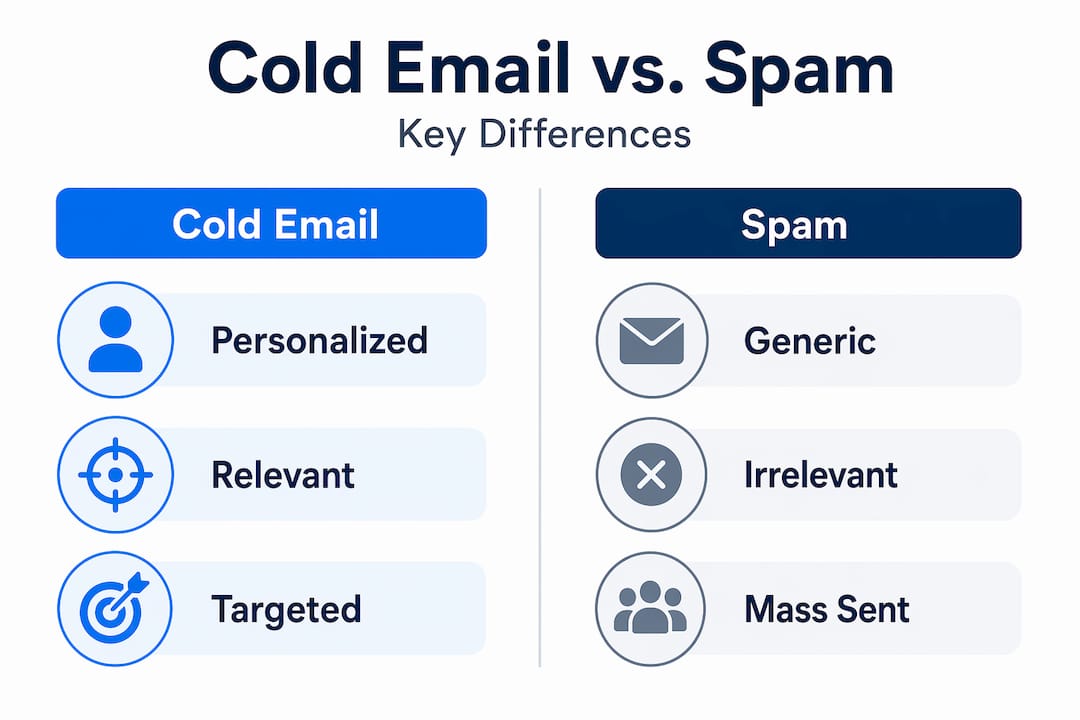
Cold email is a targeted, unsolicited message sent to someone you have no prior relationship with, but with one critical distinction from spam: it is relevant, personalized, and legally compliant. Spam is a volume game. Cold email is a relevance game. The difference is not just philosophical. It has direct consequences for deliverability, reply rates, and your brand.

Here is how the two stack up across the criteria that actually matter:
| Factor | Cold email | Spam |
|---|---|---|
| Personalization | High: name, company, specific pain point | None or minimal |
| Relevance | Tailored to recipient's role and context | Generic offer to any inbox |
| Legal compliance | CAN-SPAM, GDPR, CASL compliant | Usually not |
| Opt-out mechanism | Clearly provided | Often absent |
| Sender identity | Transparent name and domain | Hidden or forged |
| Intent | Start a conversation | Push a transaction |
The legal side matters more than most sales reps realize. Regulations like CAN-SPAM in the US and GDPR in Europe do not prohibit unsolicited B2B outreach, but they do require you to identify yourself honestly, honor opt-out requests promptly, and avoid deceptive subject lines. Ignoring these rules does not just risk fines. It gets your domain blacklisted.
What separates a well-executed cold email from something that looks like spam comes down to a few observable traits:
- Specific recipient context: The email references something real about the prospect, like their job title, company news, or a recent trigger.
- Clear sender identity: The reader knows exactly who is reaching out and why.
- Single, focused ask: There is one clear next step, not a wall of links and product features.
- Unsubscribe path: The recipient can always opt out with minimal friction.
Misunderstanding this distinction is one of the most expensive mistakes in cold outreach. Teams that send high volumes of generic messages damage their domain reputation and make future campaigns harder to land, even when the targeting improves later.
Structure of an effective cold email
Knowing what a cold email is does not automatically tell you how to write a cold email that gets replies. The structure matters enormously. Each component has a specific job, and if one fails, the whole email often does.
Here is how to build a cold email that works in 2026:
1. Subject line (under 50 characters): Specific, personalized subject lines improve open rates by up to 26%. Skip generic phrases like "Quick question?" or any all-caps formatting. Instead, reference something real. "Saw your Q3 hiring push in Austin" will outperform "Partnership Opportunity" every time.
2. Opening line (one sentence, never templated): This is where most cold emails fall apart. The opening line must be uniquely personalized with recent, relevant information about the recipient. A generic opener signals automation immediately, and response rates drop. Read something the prospect actually published, announced, or changed recently. Reference that.
3. Body (75 to 150 words, one idea only): Effective cold emails average 75 to 150 words focused on one clear problem or insight. Not three benefits. Not a feature list. One problem you can credibly connect to the prospect's world. Shorter than 50 words feels abrupt. Longer than 200 words loses busy recipients before the CTA.
4. Social proof signal (one line): A brief credibility marker helps. Something like "We helped a similar SaaS company cut their sales cycle by 30%" is more useful than a company bio. It does not need to be elaborate. It just needs to be real and relevant.
5. Call to action (low friction, yes/no style): Vague CTAs create emotional labor for the prospect, and that kills replies. Swap "Let me know your thoughts" for something like "Worth a 3-point teardown of your current approach?" The second version invites a simple yes or no. That small shift has a measurable impact on reply rates.
6. Follow-ups (add value, never repeat): Do not send a follow-up that says "Just checking in." That wastes both of your time. Each touchpoint should add something new. A relevant case study, a data point tied to their industry, a fresh angle on the original problem.
Pro Tip: Write your opening line last. Draft the entire email first, then come back and craft one sentence that makes it feel like the email was written specifically for that person on that day.
Technical best practices for deliverability
The best-written cold email is worthless if it lands in a spam folder. Deliverability is a technical asset that requires ongoing management, not a one-time setup task. Here is what you need to get right in 2026.
Authentication protocols: Every domain used for cold outreach must have three DNS records configured correctly:
- SPF (Sender Policy Framework): Tells receiving servers which IP addresses are authorized to send email on your behalf.
- DKIM (DomainKeys Identified Mail): Adds a cryptographic signature to your emails that proves they were not tampered with in transit.
- DMARC (Domain-based Message Authentication): Instructs receiving servers what to do when SPF or DKIM checks fail, and gives you reporting visibility.
SPF, DKIM, and DMARC are critical for inbox placement. Missing even one creates trust gaps that modern email providers exploit to filter your messages out.
Warm-up and send limits: New domains need time to build reputation. A warm-up period of at least 14 days with limits of 30 to 50 emails per day per account is the current baseline. Rushing this step is one of the most common technical mistakes cold emailers make. Inbox providers weight engagement signals heavily, so starting slow and building momentum is far more effective than a cold start with 500 sends.
Infrastructure and domain hygiene:
- Use secondary domains for cold outreach to protect your primary domain.
- Dedicated secondary domains protect the email reputation of your main company address.
- Keep complaint rates below 0.1%. Above that threshold, Gmail and Outlook begin routing your mail directly to spam.
- Clean your lists regularly. Bounce rates above 3 to 5% signal low list quality to email providers.
| Technical element | Recommended standard |
|---|---|
| SPF record | Configured on all sending domains |
| DKIM signing | 2048-bit key, matching domain |
| DMARC policy | At minimum "p=none" with reporting |
| Warm-up period | 14+ days before full volume |
| Daily send limit | 30 to 50 per inbox account |
| Bounce rate ceiling | Under 3 to 5% |
| Complaint rate ceiling | Under 0.1% |
Pro Tip: Set up your cold email domains at least three to four weeks before you plan to send your first campaign. Trying to warm up and run a campaign simultaneously is a shortcut to inbox placement failure.
For a deeper look at compliance requirements, the guide on email marketing compliance in 2026 covers the regulatory landscape in detail.
Targeting, personalization, and timing
Volume used to be the cold email strategy. Send more, get more. That model is largely broken now. Modern inbox filtering and buyer sophistication have shifted the math. Sending to a small, engaged audience consistently beats mass blasts to large, uninterested lists.
The sharper approach in 2026 is intent-based targeting. Instead of building lists by job title alone, you look for active signals that tell you a prospect has a live problem you can solve right now.
Common trigger signals worth tracking include:
- Funding rounds: Companies that just raised a Series A or B are actively spending on growth tools and headcount.
- New executive hires: A new VP of Sales or CMO often brings in new vendors within 90 days of starting.
- Product launches: A company that just shipped a new product is likely hiring, marketing hard, and open to relevant support.
- Job postings: Roles being actively recruited signal pain points in that department.
Timing outreach around business triggers dramatically improves cold email relevance and conversion. This is not about luck. It is about building a systematic process for monitoring your prospect list for the moments that matter.
On the personalization side, the bar in 2026 is higher than it was two years ago. Lazy personalization, like inserting a first name or company name into a template, no longer moves the needle. Real personalization means referencing the actual reason you reached out to this specific person at this specific time. Check their LinkedIn activity, read their company announcements, look at what they are publicly talking about. That research takes 10 minutes per prospect and can double your reply rate.
For practical frameworks on B2B outreach personalization, the B2B outreach best practices guide from Spherescout is worth bookmarking.
How to test and optimize your campaigns
Writing a good cold email is the beginning, not the end. The teams consistently achieving reply rates of 15% or higher are the ones treating their campaigns as experiments, not finished products.
Here is a practical optimization process you can run on any campaign:
1. Start with two subject line variants. Split your initial send 50/50 and measure open rates after 48 to 72 hours. One will outperform. Move forward with the winner and retire the other.
2. Test one variable at a time. Changing your subject line, opening line, CTA, and body copy simultaneously tells you nothing. Isolate the variable you think is underperforming and run one controlled test.
3. Set benchmark expectations early. A reply rate between 8 and 12% is realistic for a well-targeted, personalized campaign. Under 5% usually signals a targeting or relevance problem, not a copywriting problem.
4. Audit your follow-up sequence. Map out each touchpoint and ask whether it genuinely adds something new. If a follow-up could be deleted without the prospect noticing, rewrite it before sending.
5. Track unsubscribes and complaints, not just opens. High open rates with high unsubscribes mean your subject lines are creating false expectations. The email body is not delivering what the subject line promised.
Pro Tip: Reply rate is the metric that actually matters. Open rates are influenced by too many technical factors, including email client pre-loading, to be a reliable indicator of campaign health.
My take on why most cold emails fail
I have seen a lot of cold email campaigns across sales teams of every size. And the failure pattern is almost always the same. The team starts with a large list, sends a generic sequence, gets a 2% reply rate, concludes that cold email does not work, and moves on. The diagnosis is wrong. The list and the message were wrong.
In my experience, the single biggest predictor of cold email success is not the copywriting. It is whether the email is arriving at the right moment. Relevance and timing trump everything, including a beautiful subject line. When you reach someone the week their company just announced a funding round and your message directly addresses the challenge that typically follows that announcement, you do not need a clever hook. The context does the work.
What I have also learned: the technical setup gets neglected until something breaks. Teams invest in copywriters and sequencing tools but skip the basics of domain authentication and warm-up. Then they wonder why their open rates collapse two months in. Deliverability is not a setup step. It is an ongoing operational practice.
The other thing I would push back on is the instinct to make CTAs ambitious. "Let's schedule a 45-minute discovery call" in a first cold email is asking for a huge commitment from someone who does not know you yet. Low-friction alternatives like "Would a quick 2-minute voice note from me be helpful?" or "Worth me sending over the specific numbers we pulled?" work better because they remove the cognitive barrier of saying yes.
Think of cold email as the start of a permission-building conversation, not a pitch. That shift in mental framing changes everything about how you write and send.
— Raphael
Start your cold email campaigns with better data
The difference between a cold email campaign that converts and one that stalls often comes down to list quality before a single word is written.
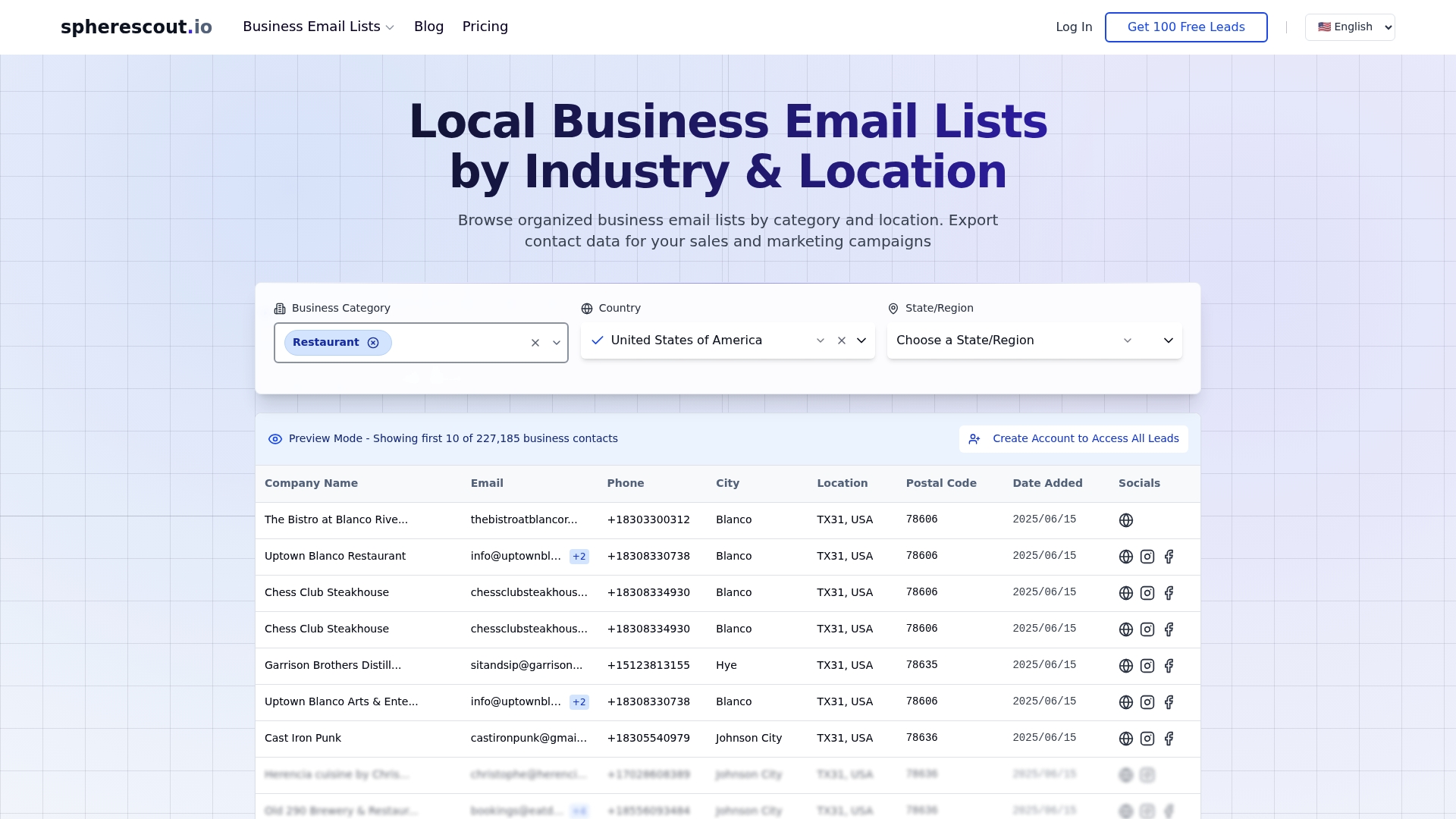
Spherescout gives sales and marketing teams direct access to targeted business email lists organized by industry, city, and postal code across the US, with over 30 million contacts available. You can filter by category, download CSV files ready for CRM import, and build prospect pools that match the intent-based targeting principles covered in this guide. Need to reach logistics companies in Dallas or SaaS firms in Austin? That level of specificity is built into the platform. You can also explore Spherescout's lead generation services to enrich and expand your prospect data as your outreach scales. Better lists mean more relevant emails, which means fewer domain reputation problems and more conversations that actually go somewhere.
FAQ
What is a cold email exactly?
A cold email is an unsolicited, targeted message sent to a business prospect you have no prior relationship with, aimed at starting a relevant conversation rather than making an immediate sale. It differs from spam by being personalized, legally compliant, and relevant to the recipient's context.
Is cold emailing effective in 2026?
Yes. Personalized cold email campaigns achieve reply rates of 8 to 12% on average, with top-performing teams reaching 15% or higher using multimedia sequences and intent-based targeting.
How long should a cold email be?
The ideal cold email body is 75 to 150 words, focused on a single idea or problem. Under 50 words feels abrupt; over 200 words loses most busy recipients before the call to action.
What makes a cold email land in spam?
Missing DNS authentication records (SPF, DKIM, DMARC), high bounce rates, complaint rates above 0.1%, and sending too much volume too fast from a new domain are the primary technical causes of cold emails landing in spam folders.
How many follow-ups should a cold email sequence include?
Most effective sequences include three to five touchpoints. 80% of successful cold email conversations happen during follow-ups, but each message must introduce new value rather than repeating the original pitch.
Recommended
- Master cold emailing: best practices for B2B success | spherescout.io Blog
- 7 High-Response Email Outreach Examples for B2B Teams | spherescout.io Blog
- How to structure outreach email for B2B lead generation | spherescout.io Blog
- Best Practices for B2B Outreach That Actually Work | spherescout.io Blog