

Most B2B sales and marketing teams at small to medium-sized enterprises send emails and then wonder why pipeline stays flat. The problem is rarely the email itself. It’s the absence of a structured process behind it. Without clean data, defined audience segments, and mapped workflows, even well-written emails disappear into inboxes without a trace. This guide walks you through every critical stage of a high-performing B2B email marketing process, from building your data foundation to measuring what actually drives revenue. Follow this framework and you’ll stop guessing and start generating.
Key Takeaways
| Point | Details |
|---|---|
| Structured data is essential | Using firmographic and behavioral data enables highly effective segmentation and boosts email campaign revenue. |
| Automated workflows outperform blasts | Implement automation for onboarding, nurture, and re-engagement sequences to drive ROI and minimize manual effort. |
| Test and optimize beyond opens | Focus on actionable metrics like CTR and replies, and continually test workflows for best results. |
| Personalization drives results | Tailor messaging for each segment and buyer journey stage to improve engagement and conversions. |
Laying the groundwork: Data, audience, and objectives
With the stakes set, let’s start with the critical foundation: your data, your audience, and your goals.
Before you write a single subject line, you need to answer three questions. Who are you targeting? What data do you have on them? And what does success actually look like for your team? Skipping this step is the single biggest reason B2B email campaigns underperform.
What data you actually need
Structured contact data is the backbone of effective B2B email marketing. This means more than just a name and email address. You need firmographic attributes (company size, industry, revenue range, location), behavioral signals (content downloads, website visits, demo requests), and role-based identifiers that map to your ideal customer profile (ICP). When you buy email database contacts that are pre-organized by these attributes, you save weeks of manual research and get to outreach faster.
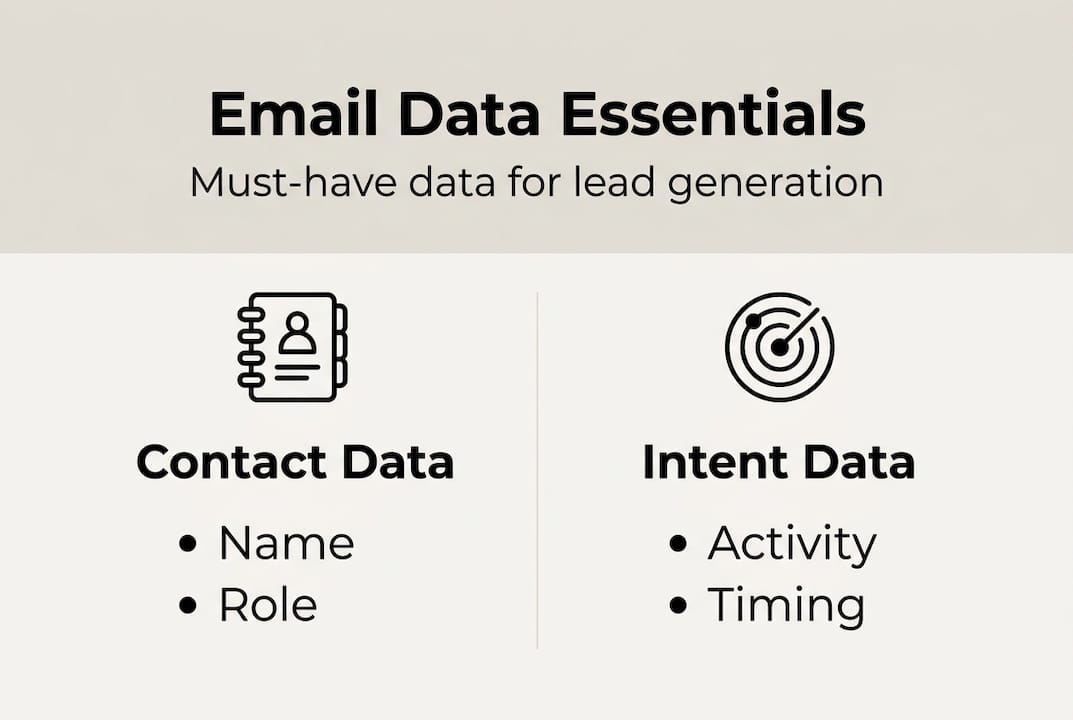
Intent data is also worth prioritizing. This tells you which companies are actively researching solutions like yours right now. Pairing intent signals with firmographic filters gives you a much sharper targeting layer than demographics alone.
Here’s a quick look at the data types and their roles:
| Data type | What it includes | Why it matters |
|---|---|---|
| Firmographic | Industry, size, revenue, location | Enables ICP matching and segmentation |
| Behavioral | Site visits, downloads, email opens | Identifies warm versus cold leads |
| Role-based | Job title, seniority, buying committee role | Ensures messaging reaches decision-makers |
| Intent | Topic research, competitor comparison | Surfaces in-market buyers early |
Defining clear objectives
Revenue targets, pipeline contribution goals, and list health metrics should all be defined before you launch. If your goal is to generate 50 qualified meetings per quarter, work backward to figure out how many emails you need to send, at what conversion rate, to hit that number. Vague goals produce vague results.
Audience segmentation
Segmentation is where most SMEs leave money on the ground. Sending one message to your entire list is the fastest way to tank engagement and inflate unsubscribes. Instead, break your audience into meaningful groups based on:
- Industry vertical (e.g., manufacturing vs. SaaS vs. professional services)
- Buying committee role (e.g., economic buyer, technical evaluator, end user)
- Funnel stage (awareness, consideration, decision)
- Engagement level (active, dormant, never opened)
You can explore lead generation for specific industries and buyer types to understand how segmentation criteria shift by sector.
Pro Tip: Segmented campaigns drive up to 760% more revenue than non-segmented sends. That number sounds extreme until you realize how much irrelevant email costs you in unsubscribes, spam complaints, and missed pipeline.
Data hygiene and compliance
Permission status matters. Before adding any contact to a marketing sequence, confirm opt-in status and check that your data collection methods align with CAN-SPAM and any applicable regional regulations. Regularly scrub your list for hard bounces, role-based addresses (like info@ or support@), and duplicates. Clean data is not optional. It’s the price of admission for deliverability.
Mapping and building your email marketing workflows
Once your groundwork is solid, the next step is to map out and automate your core workflows.

A workflow is a pre-planned sequence of emails triggered by time, behavior, or both. For B2B teams, workflows do the heavy lifting between initial contact and sales conversation. They keep your brand visible during long buying cycles without requiring a rep to manually follow up every few days.
Core B2B workflows every SME needs
Key automation workflows for SMEs typically include five categories:
- Welcome and onboarding sequences: 3 to 5 emails sent over the first two weeks after a contact joins your list. Goal: orient the new contact, set expectations, and deliver immediate value.
- Lead nurture sequences: 8 to 12 emails spread across 3 to 6 months, personalized by persona and funnel stage. Goal: move leads from awareness to consideration without overwhelming them.
- ABM (account-based marketing) sequences: Targeted flows for high-value accounts, often involving multiple stakeholders. Goal: coordinate messaging across the buying committee.
- Re-engagement sequences: Triggered when a contact goes inactive for 60 to 90 days. Critical because B2B lists decay at roughly 25% per year.
- Behavioral trigger sequences: Fired by specific actions like downloading a case study, visiting a pricing page, or clicking a product link. These are your highest-converting flows because they respond to demonstrated interest.
How to map workflows to buyer stages
Here’s a comparison of the most common workflow types and their primary objectives:
| Workflow type | Trigger | Duration | Primary goal |
|---|---|---|---|
| Welcome/onboarding | List join or demo request | 2 weeks | Build trust, deliver value |
| Lead nurture | Stage entry or content download | 3 to 6 months | Move leads toward sales readiness |
| ABM sequence | Account identified as target | Ongoing | Multi-stakeholder engagement |
| Re-engagement | 60 to 90 days of inactivity | 2 to 3 weeks | Recover or remove cold contacts |
| Behavioral trigger | Specific action (click, visit) | Immediate to 1 week | Capitalize on intent signals |
Building your workflows step by step
1. Plan: Define the trigger, audience segment, goal, and number of touchpoints for each sequence.
2. Draft: Write each email with a single clear call to action. Avoid cramming multiple offers into one message.
3. Automate: Load sequences into your email platform and set trigger conditions. Test every branch of your logic before going live.
4. Test: Run A/B tests on subject lines, send times, and email length for at least two to four weeks before drawing conclusions.
5. Optimize: Review performance data, cut what isn’t working, and double down on what is.
You can support your workflow planning with structured prospecting data from lead generation functions to ensure each sequence starts with the right contacts in the right segments.
Pro Tip: Automated email flows generate significantly more revenue than one-off broadcast emails. The reason is simple: they reach contacts at the right moment, not just when it’s convenient for your team to send.
Crafting and personalizing your B2B email content
Having outlined your email sequences, the next area is content personalization: what your leads actually read.
Even the best-mapped workflow fails if the content inside each email doesn’t resonate. Personalization is not just inserting a first name. It’s about making every message feel like it was written specifically for that person’s situation, role, and stage in the buying process.
AI versus human writing: Where each excels
AI tools are genuinely useful for generating subject line variations, drafting initial email copy, and testing different messaging angles quickly. Where they fall short is nuance. AI for subject lines and drafts works well, but human review is essential for catching tone mismatches, factual errors, and messaging that doesn’t align with your brand voice.
A practical approach: use AI to generate three to five subject line options and a rough first draft, then have a human editor refine the copy for clarity, relevance, and brand fit. This hybrid method is faster than writing from scratch and more accurate than relying on AI alone.
Personalization strategies that actually move the needle
- Name and company personalization: Basic but still effective. Use merge tags correctly and always have a fallback value.
- Firmographic personalization: Reference the contact’s industry, company size, or role in the body copy. “As a VP of Sales at a 50-person SaaS company, you’re probably dealing with…” is far more engaging than generic copy.
- Recent activity personalization: If a contact downloaded your pricing guide, your next email should reference that action. Behavioral triggers make this easy to automate.
- Buying stage messaging: An awareness-stage contact needs education. A decision-stage contact needs proof and urgency. Sending the wrong message at the wrong stage is a fast way to lose a lead.
Preference centers and frequency management
Give contacts control over how often they hear from you. A preference center lets them choose weekly, biweekly, or monthly cadences, and select topics they care about. This reduces unsubscribes and keeps your list engaged longer. It’s a small investment that pays off in list health over time.
“The biggest mistake B2B marketers make is treating personalization as a feature rather than a strategy. Relevance is not about inserting a name. It’s about delivering the right message to the right person at the right moment in their buying journey.”
You can find practical examples and B2B lead generation segmentation tactics on our blog to help inform your content strategy by segment and industry.
Testing, analytics, and optimizing for lead generation ROI
Personalized content alone isn’t enough. Optimal results require continuous measurement and adjustment.
Sending great emails without tracking the right metrics is like running a sales team without a CRM. You’re flying blind. The analytics layer is where B2B email marketing either pays off or quietly wastes budget.
Move beyond open rates
Open rates are no longer reliable. Apple’s Mail Privacy Protection (MPP) inflates open rates artificially, making them a poor indicator of actual engagement. B2B benchmarks for 2026 show open rates ranging from 18% to 42%, but the more meaningful metrics are:
| Metric | 2026 B2B benchmark | What it tells you |
|---|---|---|
| Click-through rate (CTR) | 2 to 4% | How compelling your content and CTA are |
| Click-to-open rate (CTOR) | 10 to 12% | Content relevance for those who opened |
| Reply rate (cold outreach) | 1 to 5% | Resonance of your messaging and offer |
| Unsubscribe rate | Below 0.3% | List health and relevance |
| ROI | $36 to $42 per $1 spent | Overall campaign efficiency |
Testing frameworks that generate real insights
1. A/B test subject lines first. Subject lines determine whether your email gets opened at all. Test one variable at a time: length, question vs. statement, personalization vs. generic.
2. Test send cadence. Some audiences respond better to Tuesday morning sends. Others engage more on Thursday afternoons. Let data tell you, not assumptions.
3. Test offers and CTAs. A “Book a demo” CTA performs differently than “Download the guide.” Test which offer resonates at each funnel stage.
4. Test email length. Short, punchy emails often outperform long-form in cold outreach. Nurture sequences can go longer. Test both.
5. Retest regularly. Audience behavior shifts. A test result from six months ago may not hold today.
Tying email activity to revenue
UTM parameters and CRM integration are non-negotiable for attribution. Tag every link in every email with UTM codes, then sync email activity to your CRM so you can see which emails influenced pipeline and closed deals. Email attribution with LinkedIn and CRM integration gives you a fuller picture of how your outreach contributes to revenue across channels.
You can also filter your lead generation for buyer types to build more targeted test groups and get cleaner data from your experiments.
Why most B2B email marketing advice leaves money on the table
Here’s a perspective you likely won’t find in most guides.
The majority of B2B email marketing content focuses on tactics: subject line formulas, send time optimization, and template design. That’s useful, but it misses the structural problem. Most SMEs don’t have a content problem. They have a data and attribution problem.
When your contact list is unstructured, segmentation is impossible. When your analytics stop at open rates, you can’t connect email activity to revenue. And when you don’t track pipeline influence, you can’t justify the budget to do email marketing properly. The result is a team that sends emails, sees mediocre results, and concludes that email “doesn’t work for us.”
The real fix is investing in structured data and integrated analytics before optimizing content. Intent data, firmographic segmentation, and systematic lead generation functions aren’t advanced tactics reserved for enterprise teams. They’re the baseline requirements for any SME that wants email to contribute meaningfully to pipeline.
Conventional wisdom says to focus on engagement metrics. Our experience says to focus on pipeline metrics first, then work backward to figure out which engagement signals predict revenue. That shift in thinking changes everything about how you build and measure your campaigns.
Transform your lead generation results with SphereScout
Ready to put this framework into action? The process above only works as well as the data powering it.
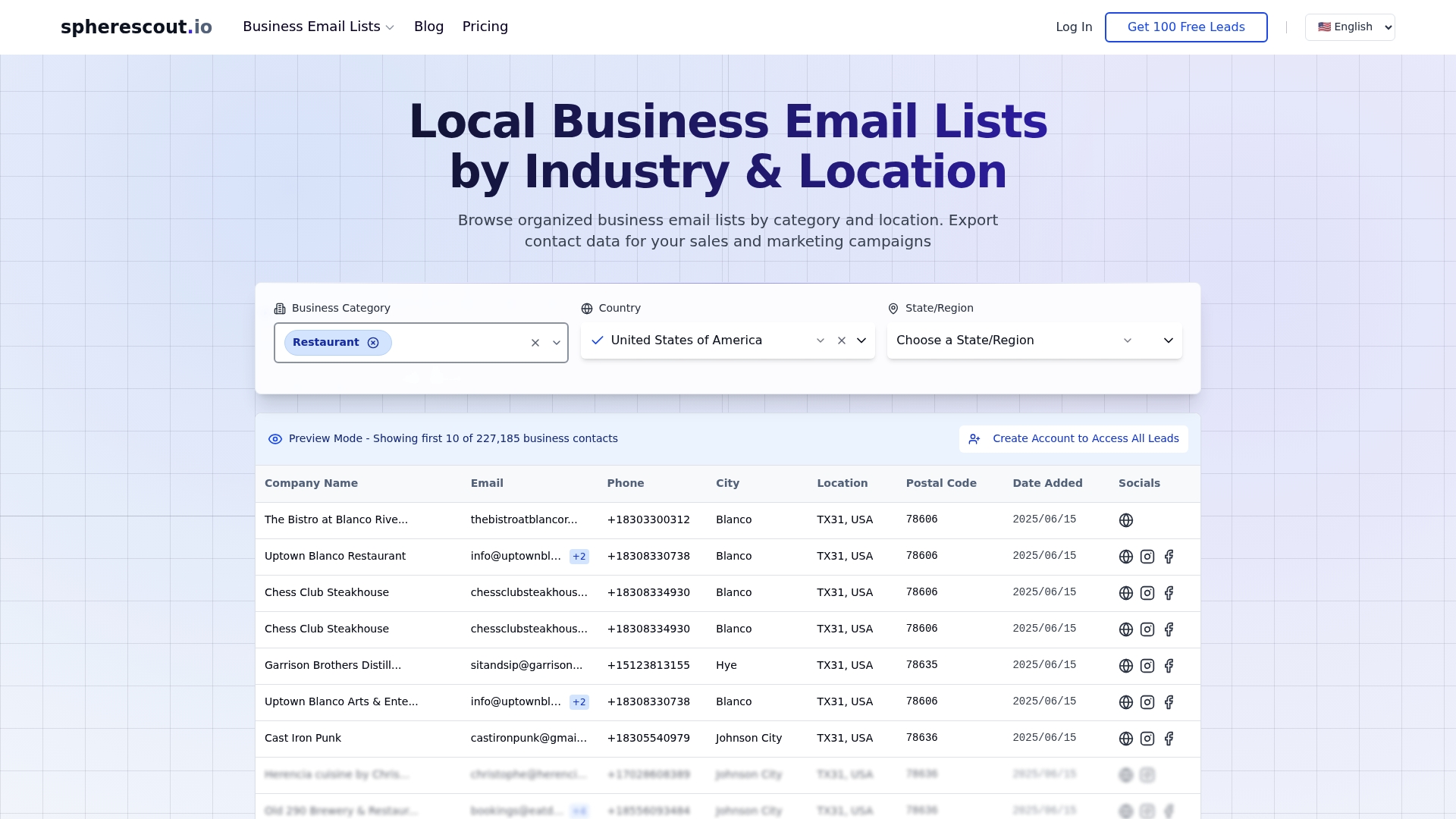
SphereScout gives B2B sales and marketing teams at SMEs instant access to structured, filterable contact lists across industries, geographies, and company sizes. You can build segmented prospecting lists by industry, city, or postal code, then export them as CSV files ready for CRM import or direct use in your email platform. Whether you need to fuel a new nurture sequence or expand an ABM campaign, our lead generation functions make it fast and straightforward. Explore our B2B email lists and see how quickly structured data can sharpen your targeting and lift your results.
Frequently asked questions
What is the most important metric for measuring B2B email marketing success?
For B2B, prioritize click-through rate, reply rate, and pipeline influence over open rates, since open rates are unreliable due to Apple’s Mail Privacy Protection inflating counts artificially.
How can SMEs reduce list decay in their email marketing process?
Implement re-engagement sequences and regularly clean your lists to address the 25% annual contact decay typical in B2B databases, removing or re-permissioning inactive contacts before they damage deliverability.
Why is structured contact data vital for segmentation?
Structured contact data fuels precise segmentation, enabling up to 760% greater revenue by targeting messaging based on firmographics, buying stage, and engagement behavior rather than sending one message to everyone.
How often should B2B email workflows be updated?
Review and update email workflows quarterly or after significant changes in your product, audience, or business goals to keep messaging relevant and conversion rates from drifting downward.