

Email isn't dying. In fact, it's one of the most resilient channels in your B2B toolkit, quietly outperforming flashier alternatives when used correctly. The problem is most teams treat it like a megaphone instead of a telephone. They blast generic messages to massive lists and then wonder why open rates tank and leads go cold. Email excels in long cycles and trust-building, but it fails hard when you ignore its pitfalls. This guide covers the specific strategies that make email marketing a genuine revenue driver for B2B teams at small to medium enterprises.
- Quality over quantity: List-building and consent best practices
- Crafting targeted email content for lead generation and nurturing
- Synchronization: Email, outbound, and sales for maximum impact
- Our take: What most B2B teams miss about email marketing
- Accelerate your B2B outreach with smarter email solutions
- Frequently asked questions
Key Takeaways
| Point | Details |
|---|---|
| Trust-building channel | Email remains central to nurturing long-term B2B relationships when executed thoughtfully. |
| List quality first | Consent-driven, highly targeted lists outperform bulk databases for engagement and deliverability. |
| Integration matters | Email's full potential is realized when sync'd with outbound and sales activities for consistent outreach. |
| Content relevance | Highly personalized and relevant emails outperform generic blasts in lead generation and nurturing. |
| Measure real impact | B2B teams should track revenue attribution to demonstrate email marketing ROI and secure buy-in. |
Understanding the role of email marketing in the B2B sales cycle
Let's get one thing straight: B2B buying isn't a quick transaction. Depending on your industry, a single deal could involve six to twelve stakeholders and take months to close. Email is uniquely suited to this reality because it scales personal, consistent communication across long decision cycles without requiring you to manually follow up every prospect every day.
Think about what happens during a typical B2B sales process. A prospect discovers your solution, shows initial interest, enters a long evaluation phase, gets distracted by internal priorities, and eventually circles back. Email is the channel that keeps your brand relevant across all those gaps. Done right, it functions as the trust-building backbone of your pipeline.
That said, email's strengths come with real limitations. Spam risks, deliverability challenges, and inbox fatigue are genuine threats. The solution isn't sending fewer emails — it's sending smarter ones. The goal is targeted, value-driven outreach rather than buying email databases and blasting everyone on a list with the same generic pitch.
Here's a direct comparison to help you see where email sits relative to other outreach channels:
| Channel | Best use case | Strengths | Limitations |
|---|---|---|---|
| Long-cycle nurturing and trust-building | Scalable, trackable, direct | Spam risk, inbox fatigue | |
| Awareness and top-of-funnel contact | Social proof, warm outreach | Limited volume, slower | |
| Cold calling | Late-stage qualification | High response rate | Time-intensive, scale issues |
| Paid ads | Brand awareness | Broad reach | High cost, low intent |
| Direct mail | Enterprise ABM campaigns | High novelty factor | Expensive, hard to track |
The real edge email holds over other channels is that it can be fully automated and personalized simultaneously. You can build a sequence that feels hand-crafted to each recipient while running in the background across hundreds of contacts. That's something LinkedIn and cold calling simply can't match at scale.
"Not all email strategies are equal. Targeted, value-driven campaigns consistently outperform high-volume blasts in both engagement and conversion."
For SMEs especially, the smart approach is to focus on France-market B2B list segmentation rather than size. A list of 500 highly relevant, well-segmented contacts will almost always beat a list of 5,000 cold, generic ones. This means investing time in building your email list from quality sources rather than shortcuts.

Quality over quantity: List-building and consent best practices
Having identified email's place in the sales cycle, let's move to the foundation: how your list quality determines results.
This is where most SMEs get it wrong. They think scale is the answer. They acquire massive lists with minimal targeting, hit send, and watch their deliverability scores crater. The reality is that a small, consent-based list of decision-makers who actually want to hear from you will dramatically outperform a bloated database of cold contacts.
The reason? Engaged subscribers signal to email service providers that your messages are legitimate and valuable. High open and click rates improve your sender reputation, which means more of your emails land in inboxes instead of spam folders. It's a compounding effect. Good list hygiene creates better deliverability, which creates more engagement, which improves your sender reputation even further.
For SMEs, as HubSpot's B2B research confirms, you should prioritize quality lists and consent over volume, align with sales on your Ideal Customer Profile (ICP) and buying committee, and report revenue attribution to secure budget. That last point is often overlooked, but we'll cover it more in the perspective section.
Here's a comparison of the most common list-building methods and their outcomes:
| Method | Average quality | Compliance risk | Time to ROI |
|---|---|---|---|
| Opt-in lead magnets | High | Low | Medium |
| Trade show or event signups | High | Low | Fast |
| Curated B2B data platforms | Medium to high | Medium | Fast |
| Cold purchased lists | Low | High | Slow or negative |
| Website form captures | Very high | Very low | Varies |
The consent piece isn't just about regulatory compliance with laws like GDPR or CAN-SPAM. It's about intent. Someone who gave you their email because they want your insights is fundamentally different from someone scraped from a directory who has never heard of you.
Here's a practical step-by-step process for implementing proper consent management:
1. Define your ICP clearly. Work with your sales team to identify the specific job titles, company sizes, industries, and geographic locations you're targeting. No consent management matters if you're attracting the wrong audience.
2. Create a value exchange. Your opt-in offer needs to give prospects a reason to share their contact details. Think case studies, ROI calculators, or industry benchmarks.
3. Use explicit double opt-in. Send a confirmation email after signup. This filters out bad addresses and confirms genuine intent.
4. Record consent metadata. Log when, where, and how consent was collected for each subscriber. This protects you legally and improves list quality over time.
5. Segment from day one. Tag subscribers by source, role, company size, and interest. The richer your segmentation, the more targeted your outreach becomes.
6. Establish a regular cleaning schedule. Remove unengaged contacts every 90 days. A smaller, active list is always more valuable than a large, dormant one.
If you're looking to accelerate the process, curated industry lists sourced from verified B2B databases can work effectively when layered on top of proper consent protocols. The key is knowing exactly who you're targeting before you reach out.
Pro Tip: Before adding any externally sourced contacts to your main email platform, run them through a small, personalized cold sequence first. Use engagement signals from that sequence to identify genuine interest before moving contacts into your primary nurture flows. This protects your deliverability and focuses your energy where it counts.
Crafting targeted email content for lead generation and nurturing
A strong list needs matching content. Let's unpack how smart targeting turns leads into true opportunities.
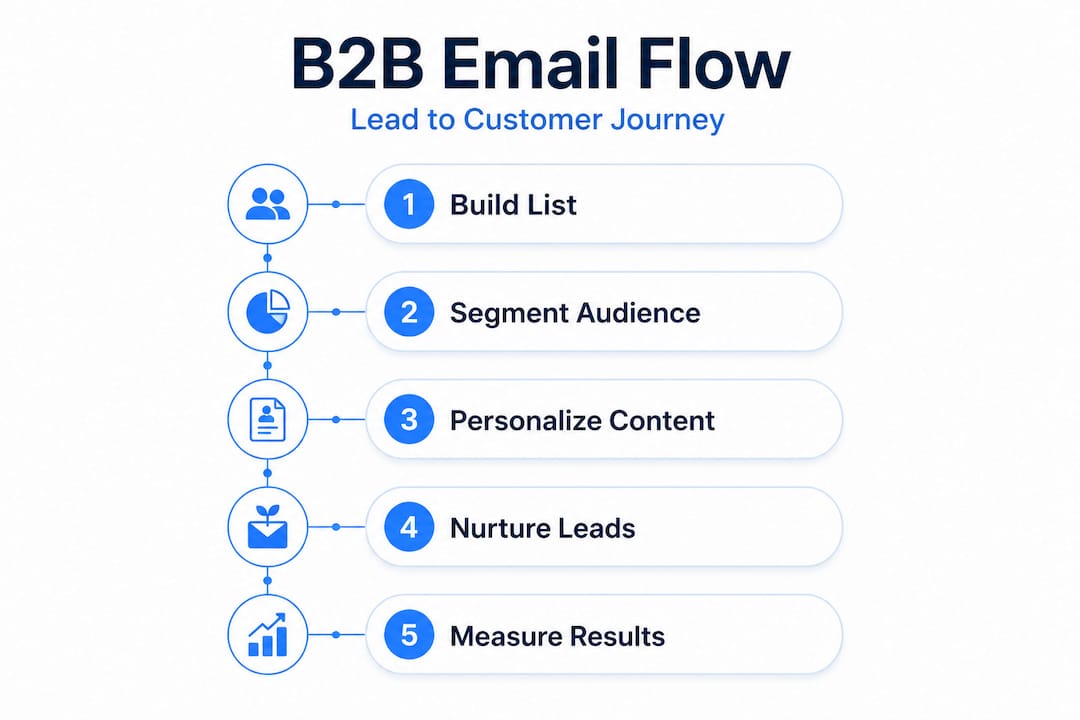
The content of your email is where most B2B campaigns either win or lose. You can have the world's best list, but if your subject line doesn't get the open, or your message doesn't deliver immediate value, you've wasted that opportunity. And here's the uncomfortable truth: high-volume blasts fail versus targeted value, every single time.
The anatomy of a high-performing B2B email:
- Subject line: Keep it under 50 characters. Make it specific and relevant to the recipient's role or challenge. "How [Company Name] reduced churn by 30%" beats "Our amazing new feature" every time.
- Preview text: Treat this as a second subject line. Most people read both before deciding to open. Use it to reinforce the hook.
- Personalization beyond first name: Reference the prospect's industry, their company size, a recent announcement, or a common challenge in their role. This signals research, not automation.
- Single, clear value proposition: Don't try to accomplish three things in one email. Pick one message and make it count.
- One call-to-action: Whether it's booking a demo, downloading a resource, or replying to the email, there should be exactly one next step. Multiple options create decision paralysis.
Mapping your content to the buyer's journey is equally critical. A prospect in early-stage awareness needs different content than someone who just requested a pricing quote.
Here are the email types that work best at each stage:
- Awareness stage: Thought leadership content, industry research, educational guides. Goal is to build credibility, not pitch.
- Consideration stage: Case studies, product comparisons, ROI frameworks. Goal is to help the prospect evaluate.
- Decision stage: Personalized demo invites, limited-time offers, social proof from similar companies. Goal is to reduce friction and drive action.
- Post-sale/retention stage: Onboarding tips, success stories, upsell content. Goal is to deepen the relationship.
Personalization has a measurable impact on performance. Emails with personalized subject lines generate significantly higher open rates compared to generic ones, and personalized automation strategies can further amplify results by triggering relevant content based on behavior.
For broader content strategy and new tactics, checking resources on B2B email content strategies regularly helps your team stay ahead of what's working in the market right now.
Synchronization: Email, outbound, and sales for maximum impact
With content in place, the next step is orchestrating your outreach across channels for greater impact.
One of the biggest mistakes B2B teams make is treating email as a standalone channel. It works far better as part of a coordinated, multi-touch outreach system. Email complements cold outbound and LinkedIn rather than replacing them. When your messaging is consistent across touchpoints, prospects build familiarity faster and conversion rates improve.
The key is sequencing. You don't want your sales rep calling a cold prospect the same day they receive their very first email. But a well-timed call after two or three email touches, combined with a LinkedIn connection request, creates a multi-channel impression that's hard to ignore. According to research shared by HubSpot, aligning with sales on a shared ICP and buying committee is fundamental to making this coordination work.
Here's a practical synchronization sequence for SME outreach teams:
1. Day 1: Send an introductory email focused on a specific pain point relevant to the prospect's role. No pitch, just value.
2. Day 3: Connect on LinkedIn with a personalized note that references the email theme.
3. Day 6: Follow up email with a relevant case study or resource. Keep it short.
4. Day 9: LinkedIn message referencing the case study. Ask a simple, low-commitment question.
5. Day 12: A direct phone call or voicemail. By now, the prospect recognizes your brand across multiple channels.
6. Day 16: Final email acknowledging the outreach and offering a clear next step or exit.
The consistency of messaging across steps matters enormously. Your email subject line tone, your LinkedIn note language, and your call script should all reflect the same positioning and value proposition.
Pro Tip: Create a one-page "outreach brief" for each ICP segment that outlines the core message, the primary pain point to address, and the preferred call-to-action. Share this with both marketing and sales before launching any campaign. When both teams speak the same language, prospects notice and trust builds faster.
For deeper guidance on email and sales alignment strategies, investing time in building this operational bridge pays dividends far beyond email metrics.
Our take: What most B2B teams miss about email marketing
Having laid out proven tactics, here's an insider perspective on what really sets leading B2B email programs apart.
Most B2B teams obsess over open rates and click-through rates. These are useful signals, but they're not the metrics that secure budget or prove the real value of your email program. Revenue attribution is what matters. When you can show leadership that email-nurtured contacts close at a higher rate, shorten the sales cycle by three weeks, or generate a specific percentage of quarterly pipeline, email stops being a "marketing cost" and becomes a strategic asset.
We've seen campaigns where tight marketing-sales collaboration produced results that surprised everyone. One scenario we've encountered: a team reduced their outreach list from 8,000 generic contacts to 1,200 highly targeted ones based on ICP alignment. Their open rates tripled, reply rates climbed significantly, and the sales team reported that prospects were arriving on calls already educated and ready to evaluate. The volume dropped, but the revenue impact went up sharply.
That's the counterintuitive insight most teams resist: doing less, better, creates more.
The inbox fatigue problem is also misdiagnosed constantly. Teams respond to declining engagement by sending fewer emails. Sometimes that helps. But more often, the real problem is relevance. Prospects aren't tired of hearing from you because you're too frequent. They're tired of hearing from you because every email looks the same and asks for something without giving anything first. Fix the value equation, and you'll find that sending more emails to the right segments actually increases engagement rather than depressing it.
Tracking real list-building results and connecting them to pipeline data is how the best teams prove email's strategic role. It changes the conversation from "how much does email cost us" to "how much pipeline does email generate."
Accelerate your B2B outreach with smarter email solutions
To put these strategies into practice at scale, quality data and automation are essential. Everything covered in this guide depends on one foundational ingredient: knowing exactly who you're reaching out to, and having accurate, current contact information to make it happen.
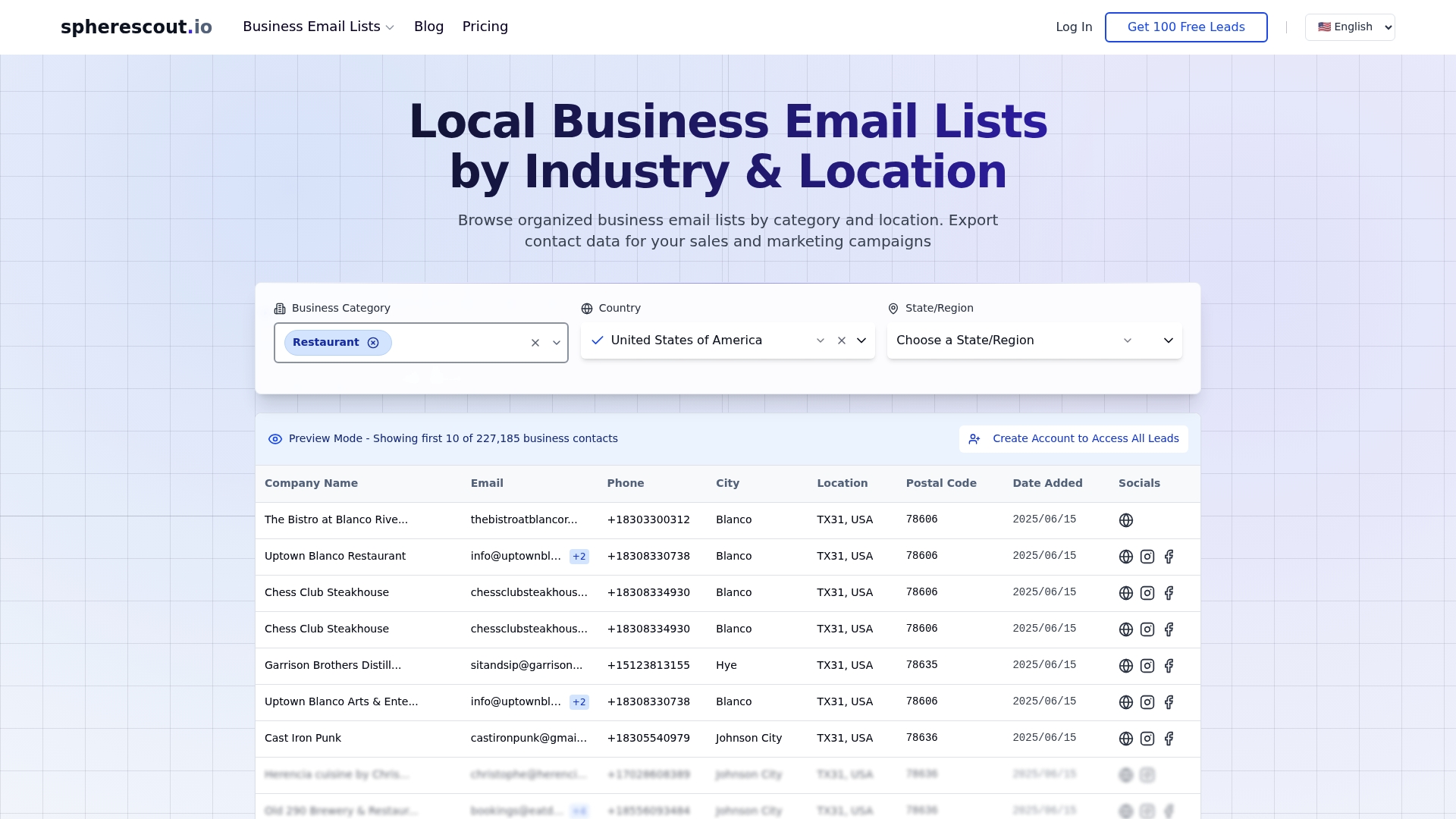
SphereScout.io gives B2B sales and marketing teams direct access to structured, filterable contact databases across industries and geographies. Whether you need USA business email lists segmented by industry and city, purpose-built lead generation tools that export CRM-ready CSV files, or instant B2B contacts for a new market you're entering, SphereScout delivers targeted prospecting data without the guesswork. With over 30 million contacts available and free sample leads to test before committing, it's a fast, low-risk way to build the quality list your email strategy actually needs.
Frequently asked questions
What is the most important metric to measure in B2B email marketing?
Revenue attribution is the most important metric because it directly connects your email activity to pipeline and closed deals, which is what secures budget and proves strategic value beyond surface-level engagement stats.
How can I reduce spam risks and improve deliverability?
Focus on consent-based list-building, highly relevant content, and regular database cleaning. Since email faces spam risks and inbox fatigue, keeping your list engaged and removing inactive contacts every 90 days makes a measurable difference in sender reputation.
Can email marketing replace LinkedIn or cold calling?
No. Email complements cold outbound and LinkedIn rather than replacing them. Multi-touch sequences that coordinate email with calls and LinkedIn messages consistently outperform any single-channel approach.
Is buying email lists a good practice for SMEs?
It can work when the lists are highly targeted and layered with proper consent and engagement protocols. HubSpot's guidance is clear: prioritize quality lists and consent over volume, especially for smaller teams where deliverability reputation is harder to recover if it dips.