
TL;DR
- The right way to do MSP lead generation: build a lead list, validate and enrich it, then run sequenced outreach.
- To build a lead list, I chose the most affordable prospecting tool: SphereScout.
- Top 3 SMB email validation tools, rated highest on Capterra: Reon Email Verifier, Proofy, and Bouncer.
75% of MSPs grow at or below the industry average of 15% annually, largely due to relying too heavily on passive referrals.
Yes, most MSPs grow through referrals, word-of-mouth, or someone knowing a guy who knows a guy.
And when it dries out, most of them go through the inbound lead gen strategy, SEO plans, writing blogs, redesigning websites, setting up paid ads.
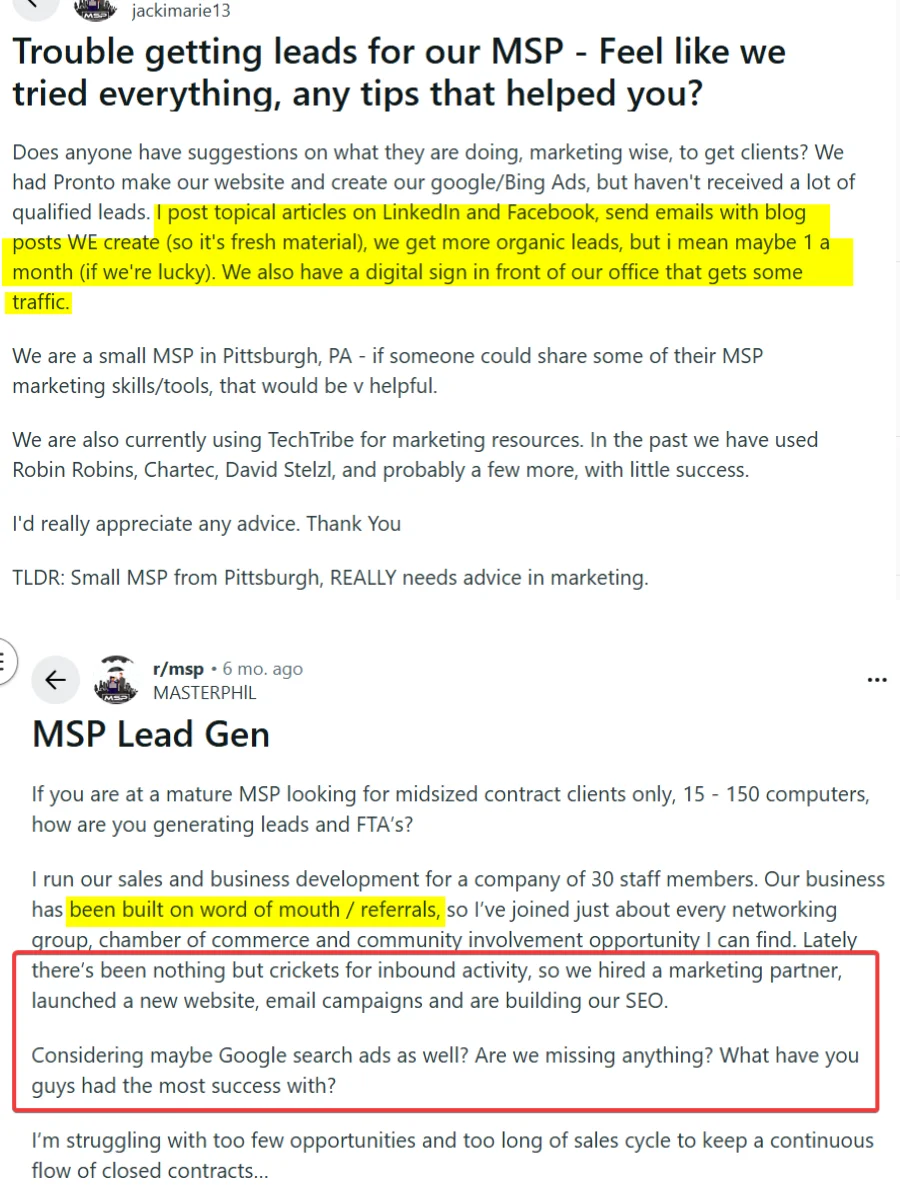
But the reality is SEO and content take months. PPC can burn cash fast.
In this guide, I will show you practical outbound lead generation strategies you can use to generate leads fast.
You’ll learn
- Where to find leads
- How to validate leads
- Practical outreach sequence.
Now, let’s start with the basics.
What is MSP lead generation?
This includes both Inbound and outbound strategies, designed to attract and nurture qualified leads actively seeking IT services.
Before moving forward, let’s understand the difference between them.
Inbound vs Outbound MSP lead generation
Inbound lead generation attracts potential customers who are already looking for solutions by sharing helpful, informative content.
Outbound lead generation is a proactive way to find customers by reaching out to people who may not know your brand or haven't shown interest yet.
So, what sets inbound and outbound lead generation apart?
Let’s see a simple comparison table to understand both better.
| Aspect | Outbound Lead Generation | Inbound Lead Generation |
|---|---|---|
| Approach | You reach out directly using email, calls, ads | You create useful content to attract people |
| Audience | Broader, less targeted | More targeted, based on interest and behavior |
| Who Starts Contact | Business starts the conversation | Prospect finds and contacts you |
| Sales Cycle | Shorter, but may feel pushy | Longer, but builds more trust |
| Cost | Can be costly (ads, tools, outreach) | Lower cost, but takes time and effort to create |
| Scalability | Can grow fast with budget and tools | Slower to start, but grows steadily |
| Lead Quality | Mixed. Some interested, some not | Higher. Leads are usually more interested |
| Effectiveness | Fast results, but may be ignored | Slow build, but steady and lasting |
Ok, here’s a simple reality check before moving forward.
Inbound can work well in the long run, but it takes time to build momentum.
SEO and content may take three to six months before a single qualified lead shows up.
But MSPs using outbound can book 10 to 15 meetings in their first month of outreach.
According to Datto MSP Report, the #1 operational issue MSPs face is acquiring new customers.
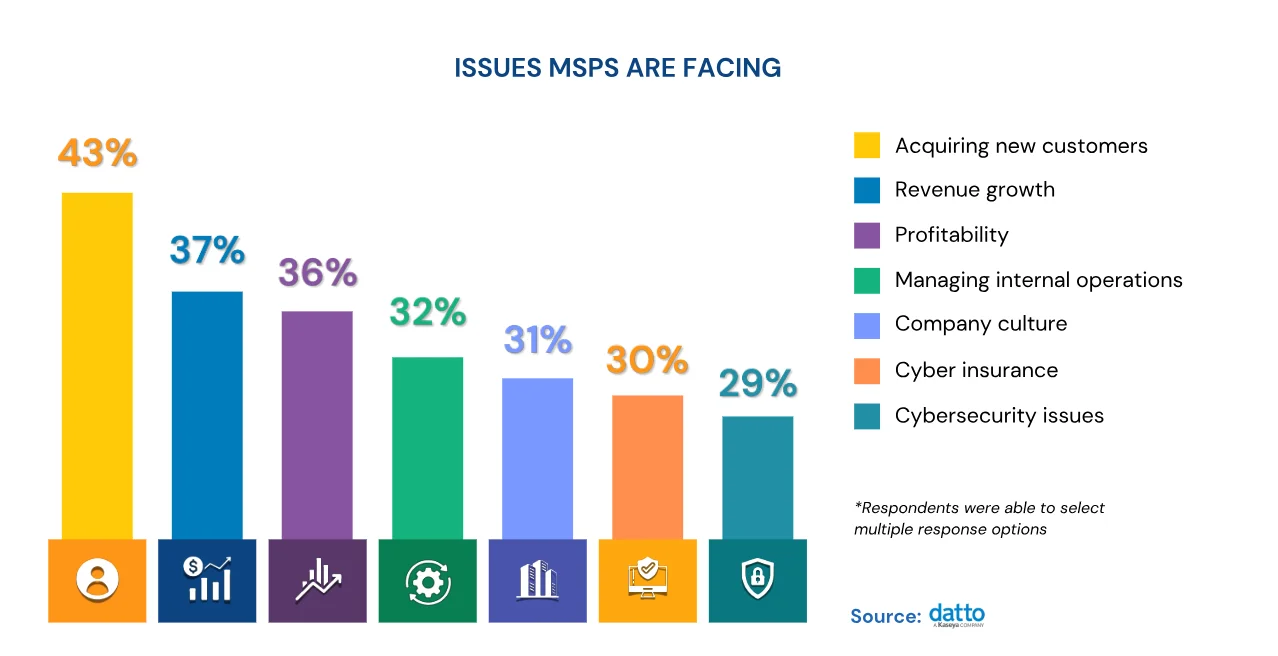
This shows the real issue. Getting new clients consistently is tough.
That’s why you need to reach out to potential customers actively instead of waiting for the next referral or a SEO lead to appear.
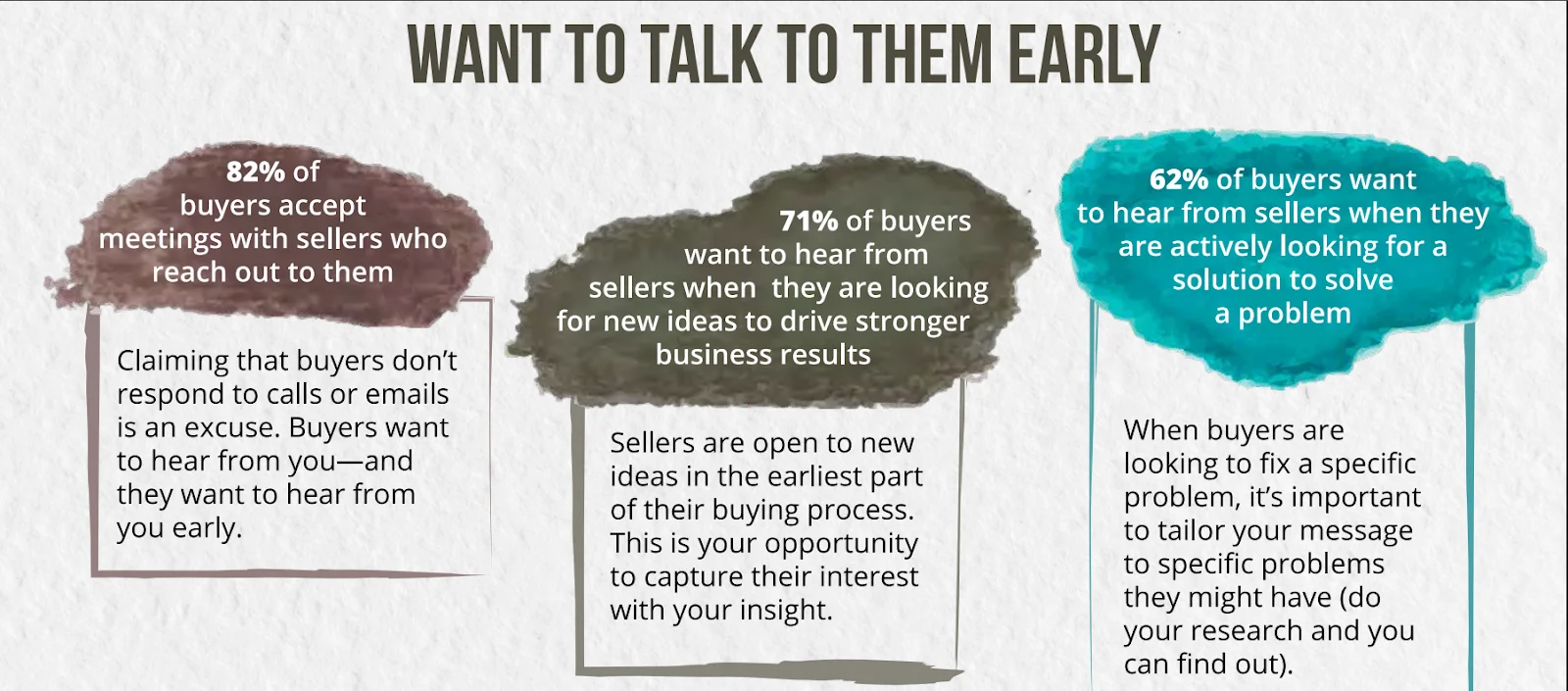
And It’s easy to assume that no one wants another sales email.
But buyers are more open to conversations than you think. 82% of buyers accept meetings with sellers who reach out to them.
Why most MSP cold outreach gets ignored
These are the main broad reasons why most managed service providers cold outreach efforts fail:
- No clear ICP (ideal customer profile) or targeting
- Reaching out with a generic pitch
- Skipping validation
- No consistent follow-up sequence
- No clear business value, only technical features
- No tracking or repeatable process
- Stopping too early before trust kicks in
Here’s how to do it properly, step by step.
The right way to do MSP lead generation

To keep it simple, I’ve narrowed it down to three key things you need to get right.
1. Build a lead list
2. Validate and enrich leads
3. Use structured outreach sequence
Let me break them down.
1. Build a lead list
Start by defining one narrow segment instead of “any business that needs IT support.”
For example, “50–150 employee healthcare clinics using Microsoft 365 within my service region.”
This level of focus gives your messaging context, which is what gets replies.
Where to Find Leads
Once your targeting is clear, you can start building your list from different reliable sources.
Industry-specific directories, like listings of local clinics, law firms, or financial service providers, are useful depending on your target audience.
You can source leads from business directories, industry association websites, and local chamber listings.
These are often overlooked lead generation ideas but work well for local MSP outreach.
You can also use LinkedIn Sales Navigator to segment by role, company size, and region based on your prospects.
Some MSPs collect leads manually from Google Business listings or map searches, but this takes more time. It slows down the sales process.
If you want to optimize your process, a data provider saves hours of research right away.
So which data provider is best? Here's a detailed guide to help you choose.
👉 19 Best B2B Data Providers and Vendors of 2025
But for this post, I selected the most affordable tool for sourcing MSP prospects.
Let’s take a closer look at Spherescout.
What is Spherescout?
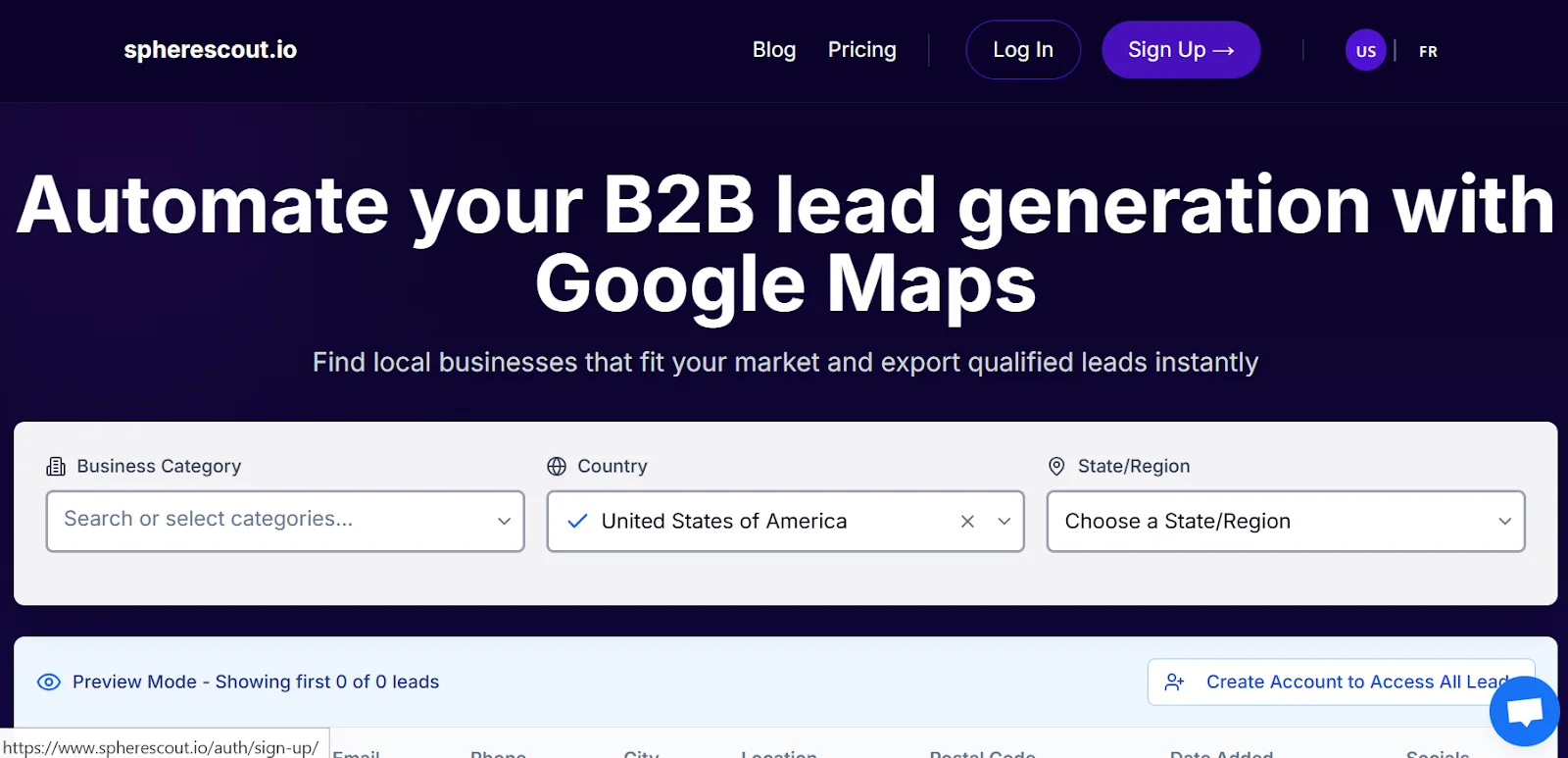
Spherescout is a B2B lead generation platform. It gives you access to millions of local business leads pulled from Google Maps and other sources.
It's built specifically for people targeting small and local businesses.
It can let you filter local businesses by industry, and location.
It can also help you extract emails, phone numbers, websites, and social profiles, saving hours of manual research.
For example, let's say your potential clients are lawyers in Tennessee.
Instead of digging through Google one by one, you just open SphereScout , type in “Lawyer” as the category, and set the location filter to ‘Tennessee’. (If you want or any region you like)
-9.gif)
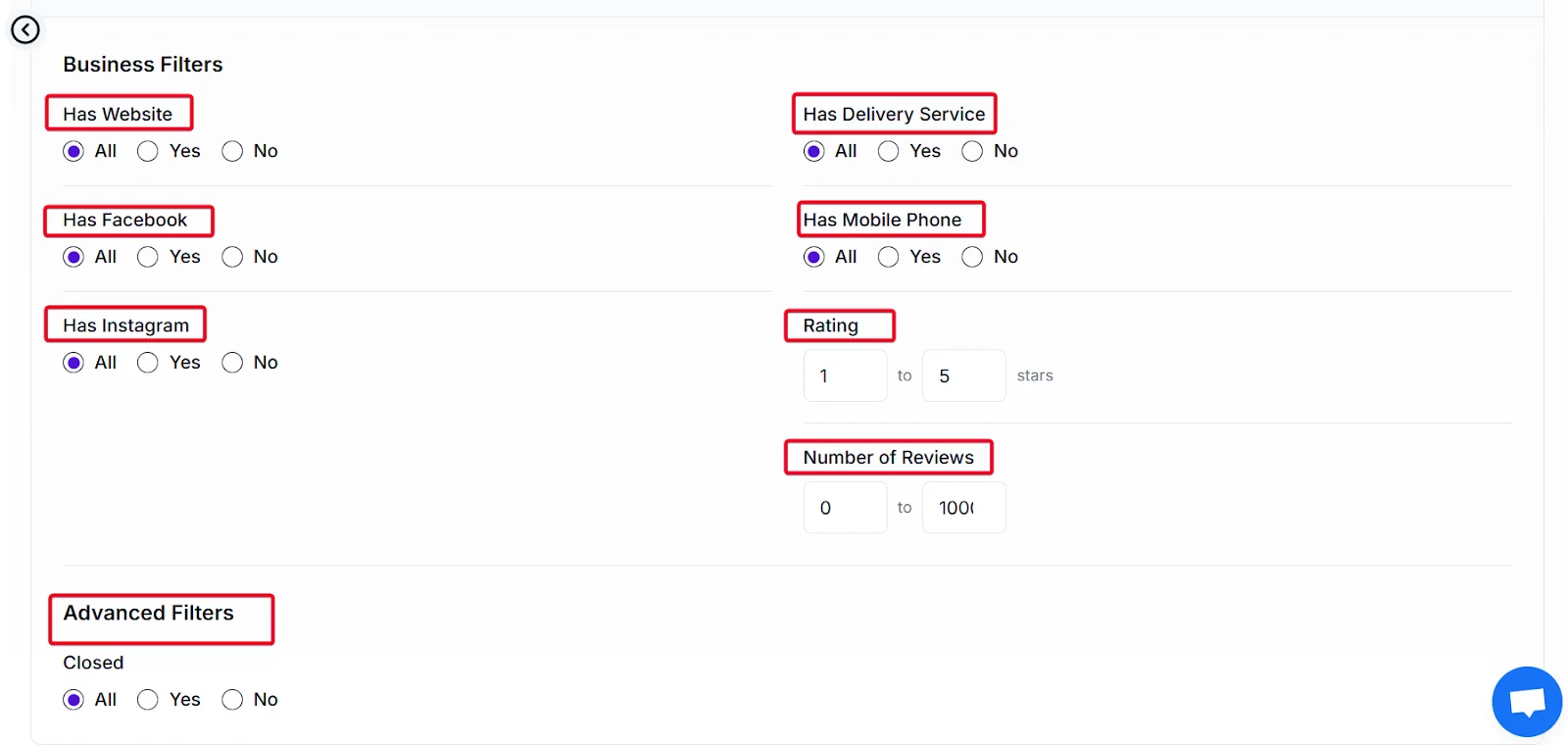
It also offers filters like website, phone, reviews, ratings, and social media profiles to help you find active, reachable businesses.
Pricing
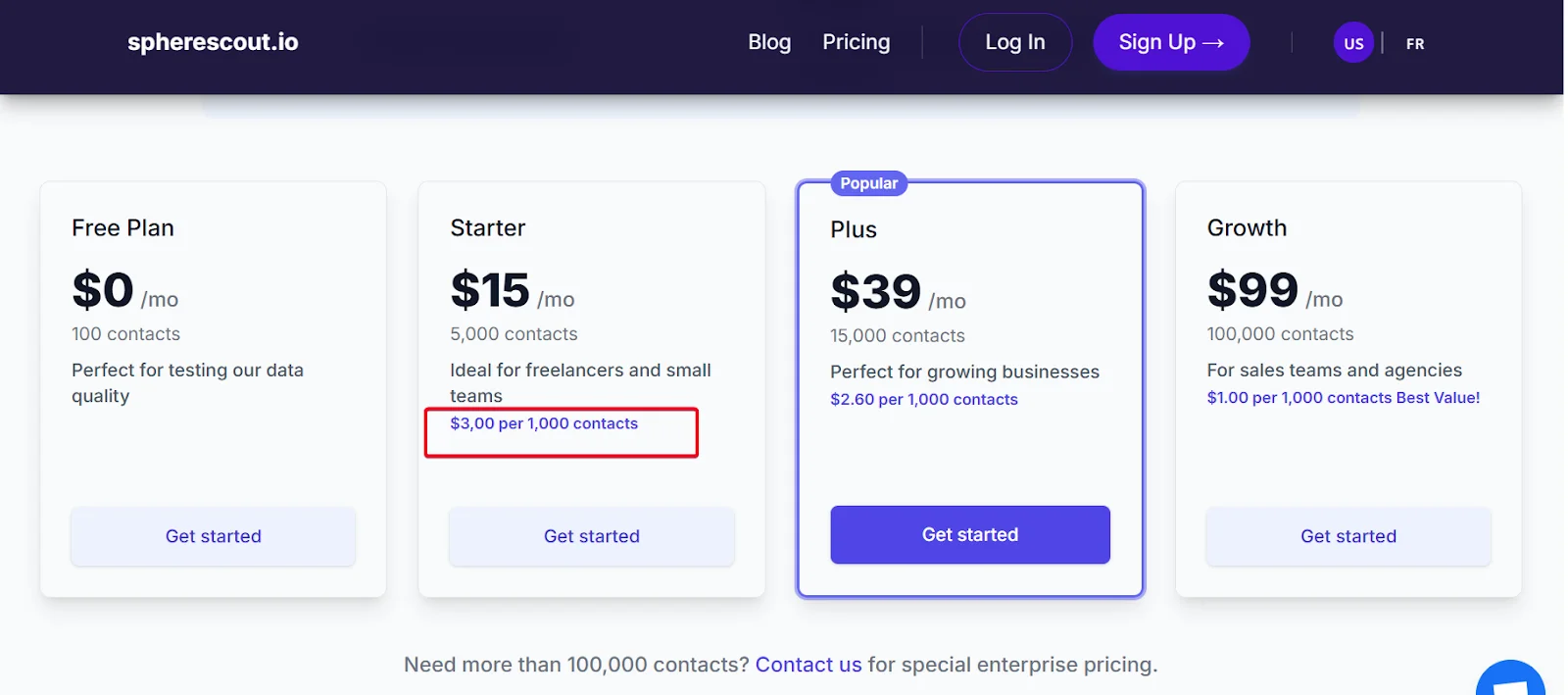
- 100 free leads to try it out
- $3 per 1000 contacts
Limitations
SphereScout only works in the US and France (For now)
if your target market is outside these regions, consider Scrap.io, it covers more countries but costs about 5x more.
SphereScout filters out fake data and refreshes it regularly, but unfortunately, it doesn’t offer email validation, at least not yet.
So it's best to use an email validation tool to remove possible undeliverable emails.
2. Validate and enrich leads
What is lead validation?
It removes invalid or risky contacts before outreach begins.
Here’s why it’s really important to do validation,
Around 40% of daily sales leads are estimated to be incomplete, duplicate, or invalid.
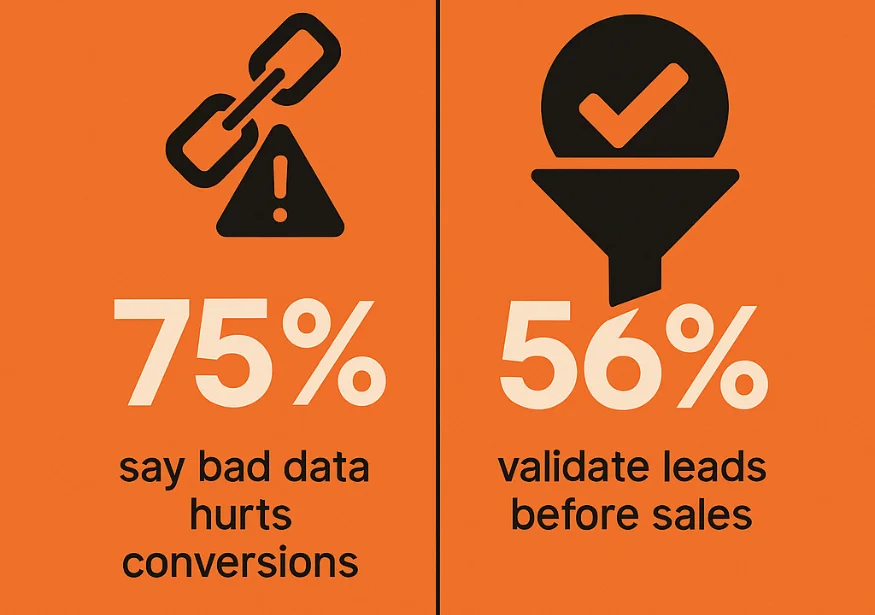
A study by Experian found that 75% of companies say inaccurate data directly hurts their ability to convert leads into customers.
56% of B2B companies do lead validation before passing the lead to the sales department.
That’s why validating emails before sending is non-negotiable in MSP outbound.
What is lead enrichment?
Here’s why lead enrichment is important;
96% of marketers say personalization leads to repeat business, and 94% say it increases sales.
Moreover, brands that leveraged personalized experiences were 215% more likely to say that their strategies successfully generated new leads and drove more sales.
If you want to explore more on lead enrichment tools, I've compared 5 tools here.
👉 5 Best Data Enrichment Tools for Local Lead Generation
So how do you do lead validation?
I’ve selected the top 3 lead validation tools. Highest rated on capterra and ideal for small and medium sized businesses.
These tools clean your list by removing possible undeliverable emails.
Let’s take a look.
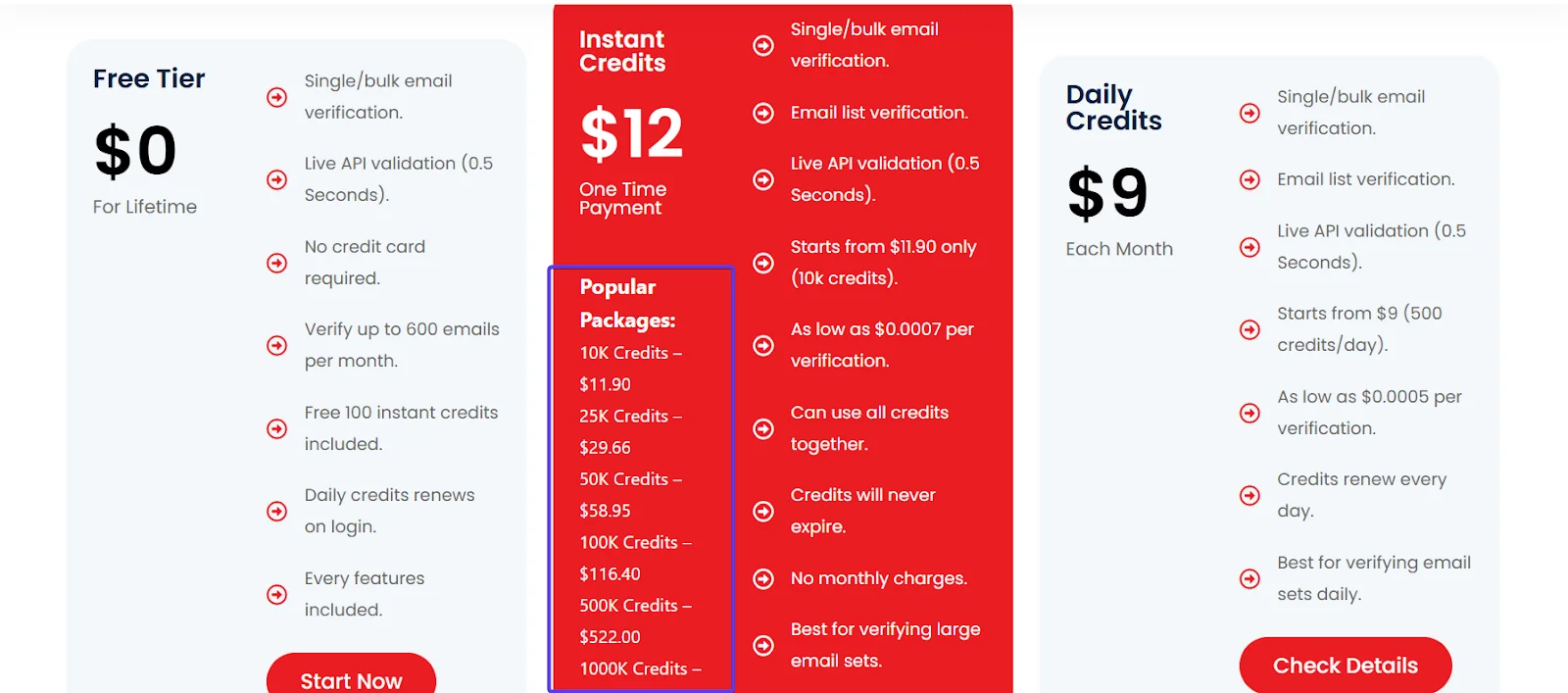
1. Reon email verifier
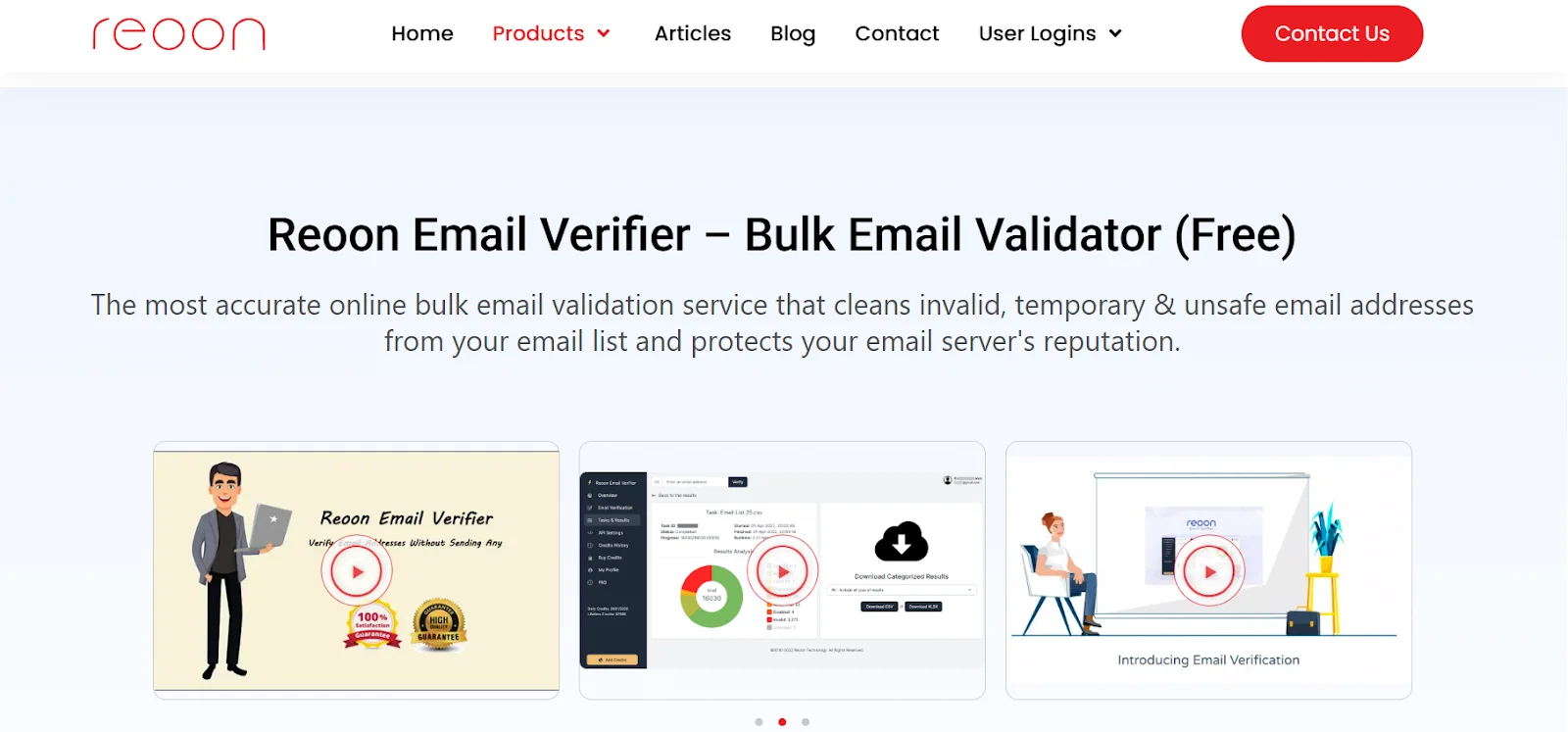
Reoon Email Verifier provides an online email validation service to help businesses and individuals clean up their email lists.
Pricing
- A free trial with 600 email validation
- Cost per 1k validation for the popular price plan is $1.2
1. Proofy
Proofy’s core service is to help businesses remove invalid and risky email addresses.
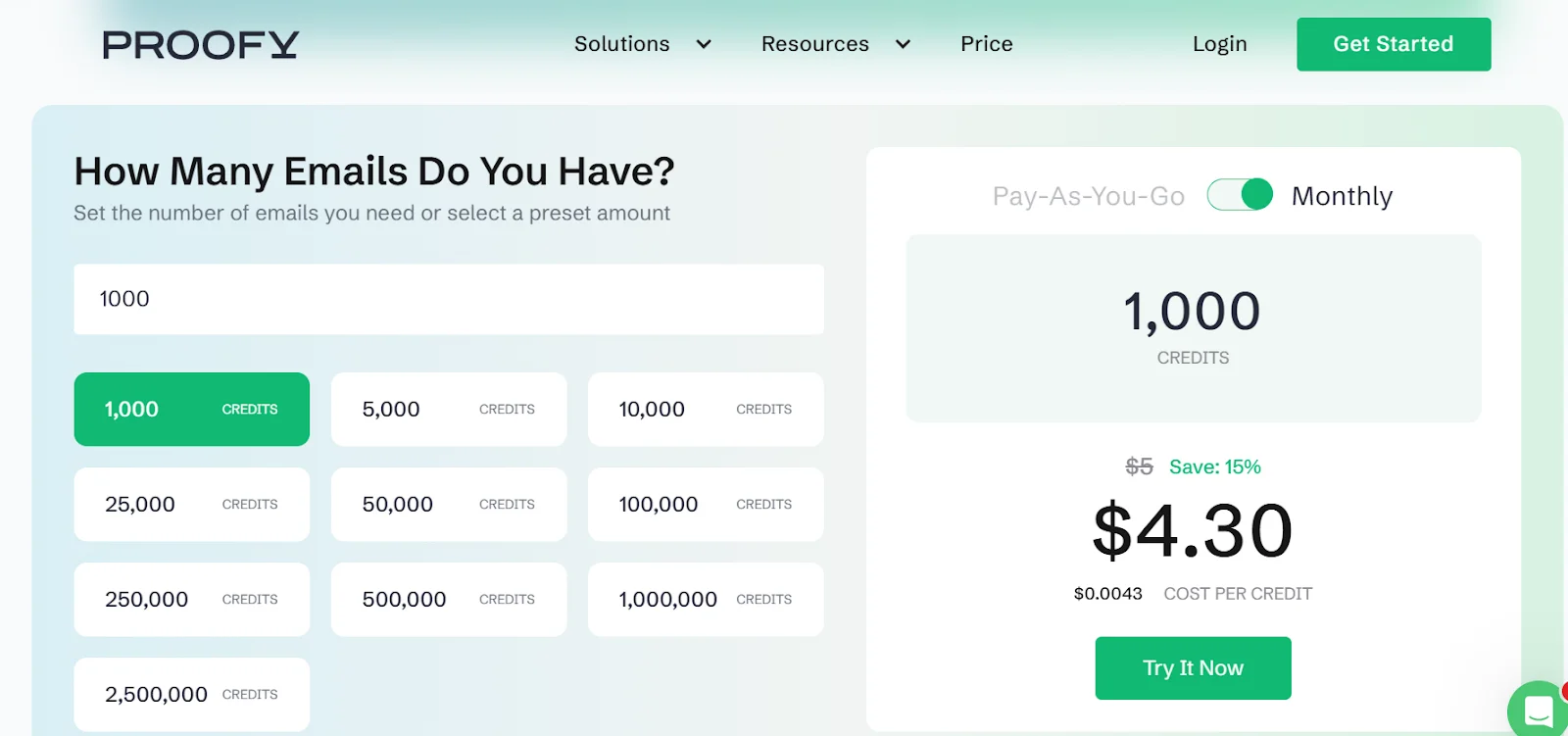
Pricing
- No free trial
- Cost per 1k validation for the popular price plan is $4.30
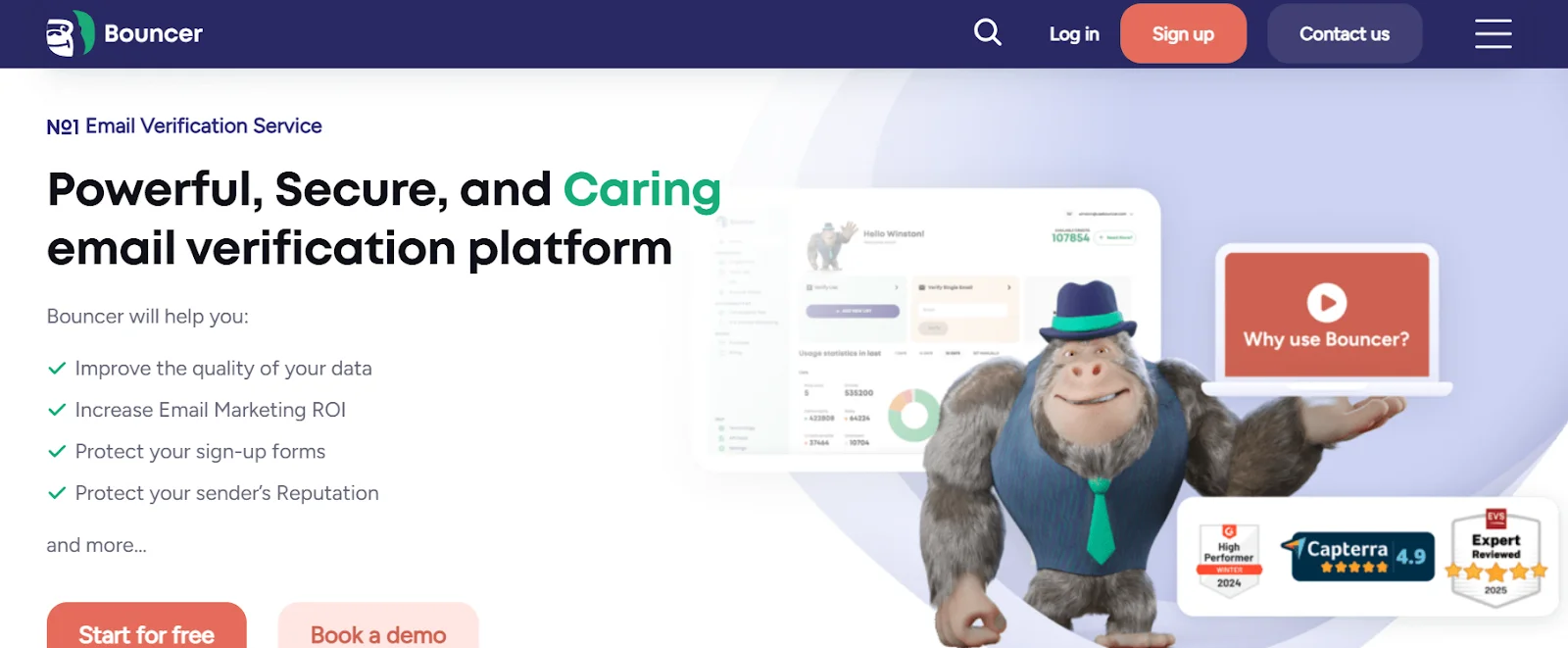
1. Bouncer
Bouncer is an email verification and deliverability service, that helps businesses maintain healthy email lists.
Pricing
- No free trial
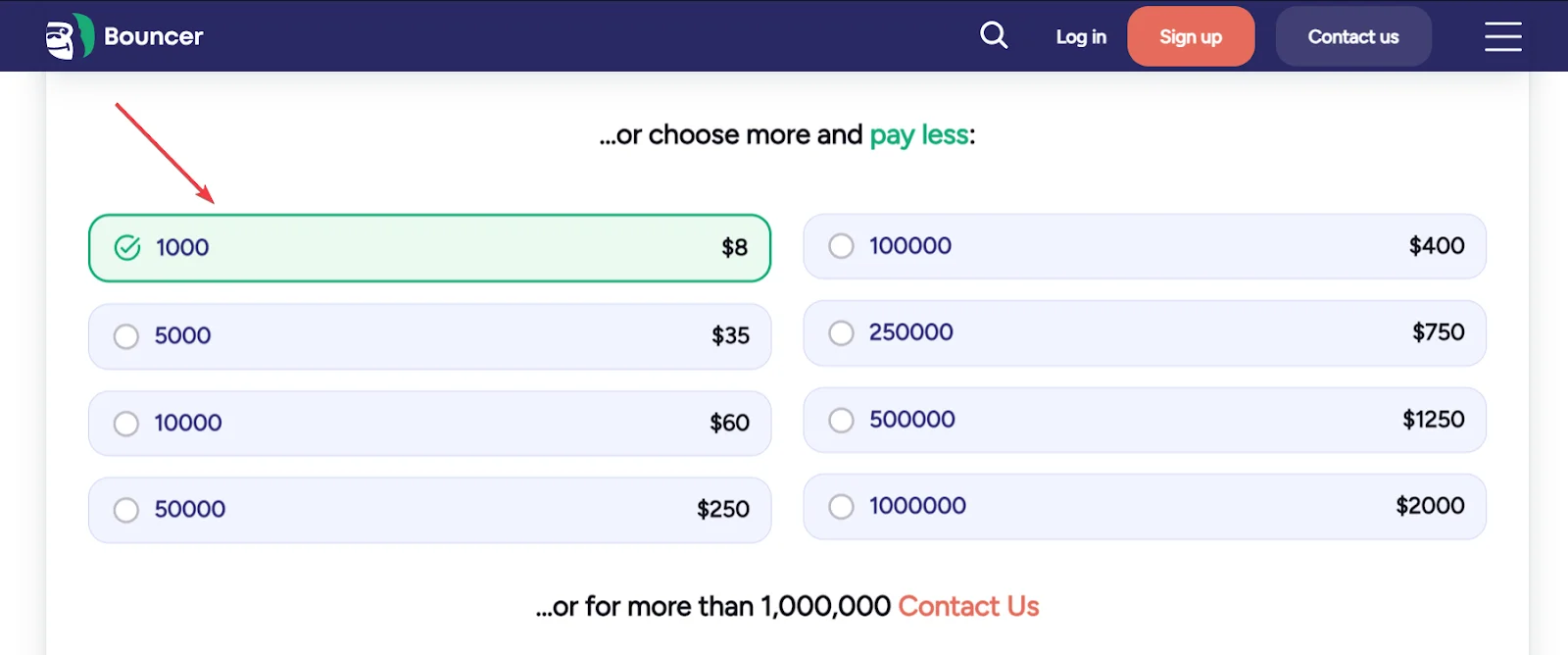
- Cost per 1k validation for the popular price plan is $8
If you want me to write a detailed review of the best email validation tools, send me a message on LinkedIn.
Ok now, once your data is clean and enriched, it’s time to move into outreach.
3. Use structured outreach sequence
It replaces the “one email and hope” approach.
Why are sequences better than a single-channel approach?
Cold email reply rates increase by over 50% with follow-ups, yet nearly 48% of reps never send a second message.
But your only point of contact should not be emails.
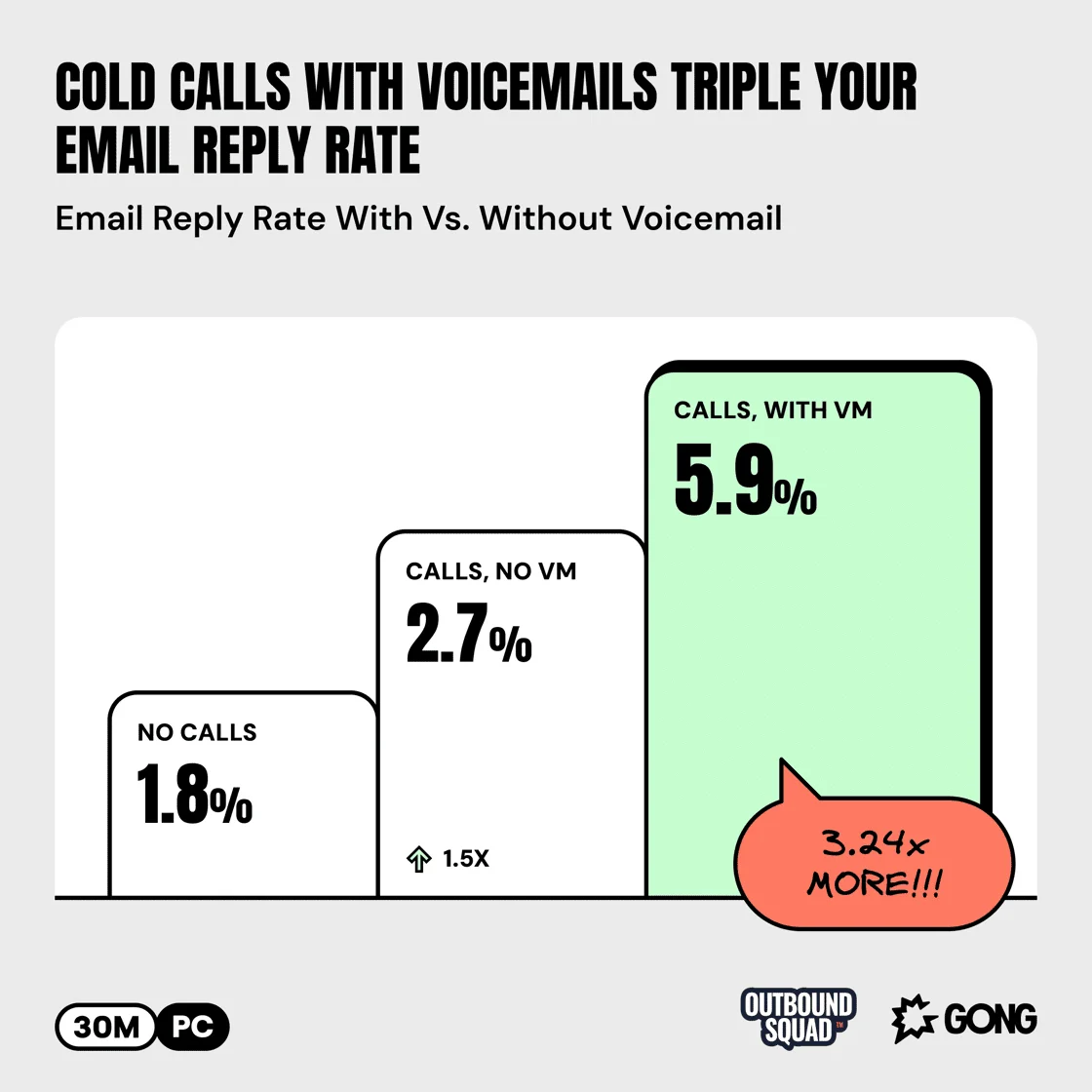
Cold calls and voicemails TRIPLE your cold email reply rates.
Use multi-channel to stuff in more touches and double your email replies.
Two realities MSPs must accept
There are two hard truths you need to accept.
The first one is, According to Comptia’s industry report, 57% of SMBs already have internal or outsourced IT.
So displacing incumbents means proving clear value, ROI, or trust gaps in current setup.
You must pitch a “switching benefit,” not just general capabilities.
And the second is, 45% of small businesses rely on business analysts or non-tech teams for tech decisions.
Messaging that’s too technical confuses them so you need business-first language.
Ok, with that in mind, let’s talk about how you can do cold outreach properly with sequences.
MSP Outreach Sequence Framework
This framework is based on 30MPC’s Perfect Outbound Sequence, which reportedly gets 20%+ reply rates from cold prospects.
The original guide compresses it into 5 concepts. To make it more actionable, I expanded those ideas into 7 principles so you can apply them directly.
Here are the key principles:
1. Use a Multi-Channel, Multi-Touch Sequence
2. Lead With One Problem Per Email
3. Follow Up With Purpose (Bubble-Ups)
4. Switch Themes If You Miss
5. Qualify With “Right Person?”
6. Use Breakup Emails to Create Closure
7. Use LinkedIn to Boost Email Visibility
Let me break it down.
1. Use a Multi-Channel, Multi-Touch Sequence
Start with a 30-day sequence.
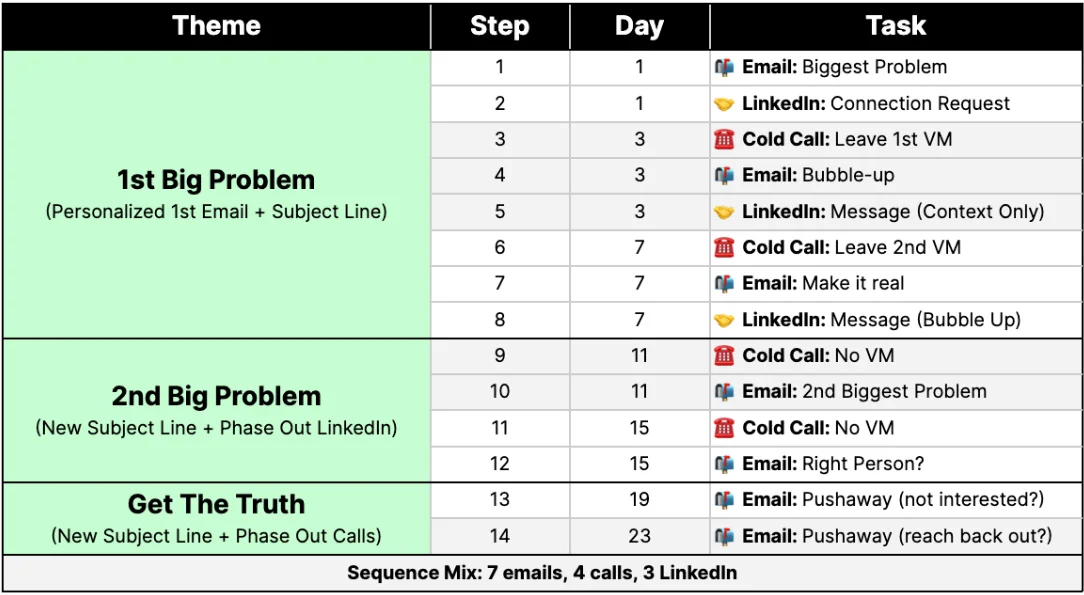
Use email, LinkedIn, and phone. Spread out 10 to 14 touches so you don’t look desperate.
2. Lead With One Problem Per Email
The first email matters most.
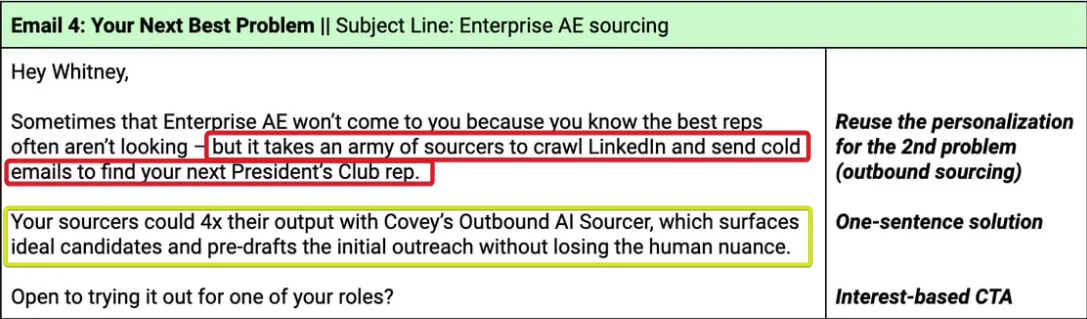
Use a simple structure, which is personalize, mention a real problem, give a one-sentence solution, and ask if they want to hear more.
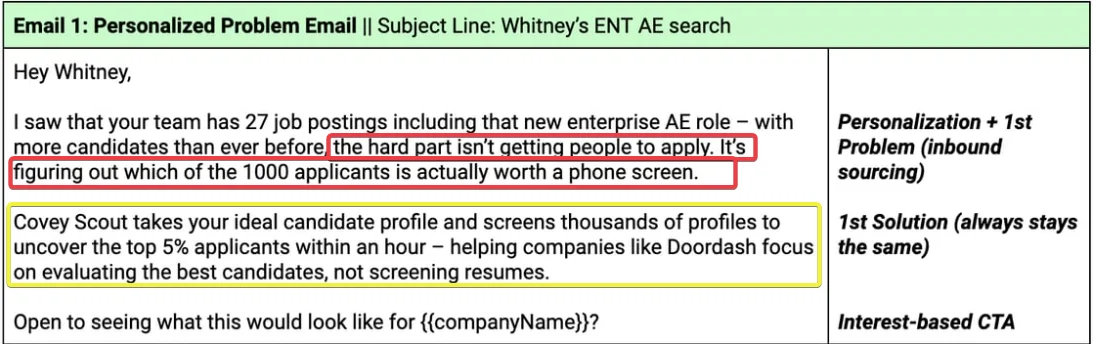
Don’t sell everything in one email. Stick to one clear problem.
3. Follow Up With Purpose (Bubble-Ups)
If they don’t reply, bubble up once or twice. Just say “any thoughts?” or “did this get buried?” Never resend the same pitch.
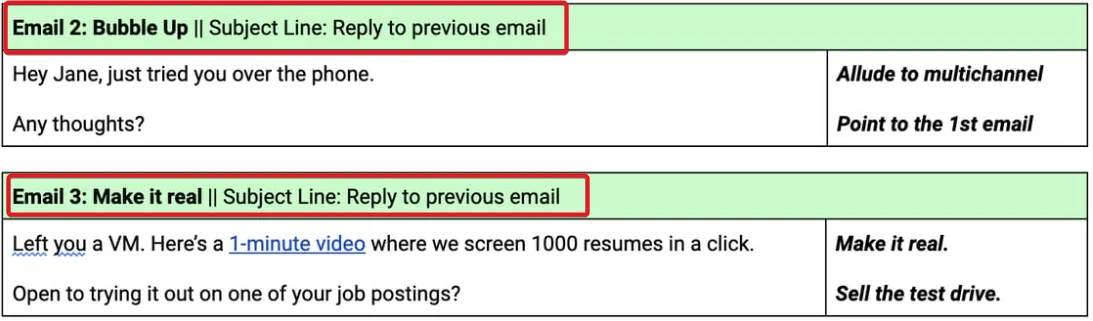
Add a quick video or case study link. Make the solution feel real without forcing it.
4. Switch Themes If You Miss
If the first problem didn’t work, change themes. New subject line but same personalization if it fits. This gives you a fresh shot at attention.
5. Qualify With “Right Person?”
And if you are not sure they’re the right person, just ask something like, “Is this even your focus area?” saves time and gets quick responses.

6. Use Breakup Emails to Create Closure
Eventually, you’ll need a breakup email.
Be human and say you’ll stop unless they tell you otherwise.

7. Use LinkedIn to Boost Email Visibility
LinkedIn isn’t for pitching. It’s to warm people up.
Send a blank connection, engage with their content, and tie your DM back to your email.
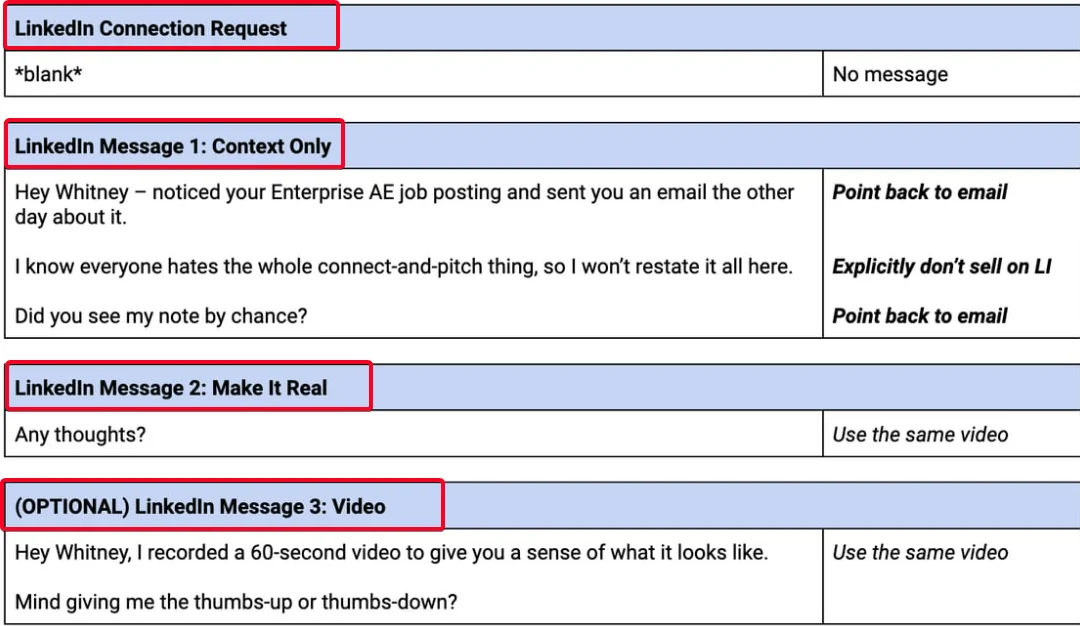
Video can help. A short, casual message can make you seem real and lower the bar to respond. But keep it optional and fast.
What software to use for cold email?
Picking a cold email tool is all about deliverability, affordability, Integration, ease of use and how well it scales.
Here’s a detailed comparison of the best cold email software.
👉I Compared Best Cold Email Software of 2025
But let me give you a quick overview of the tools mentioned in the article.
| Tool | Rating | Popular Plan/Send Volume | Deliverability | Ease of use | Scalability |
|---|---|---|---|---|---|
| SalesHandy | 4.5 | $99/150k email sent | Top 💯 | Good 👍 | Top 💯 |
| Instantly | 4.9 | $77.6/100k email | Top 💯 | Top 💯 | Good 👍 |
| Smartlead | 4.6 | $94/150k email | Good 👍 | Good 👍 | Top 💯 |
| Mails AI | 4.8 | $49/unlimited | Good 👍 | Bad 👎 | Good 👍 |
| Mailshake | 4.6 | $99/unlimited | Good 👍 | Bad 👎 | Good 👍 |
| Lemlist | 4.5 | $99/unlimited | Good 👍 | Bad 👎 | Top 💯 |
| Emailchaser | - | $97/unlimited | Top 💯 | Top 💯 | Bad 👎 |
What software to use for cold calls?
Not every tool is built for every business.
If you want a deep comparison on cold calling tools, here’s an article.
👉Best Cold Calling Software? I Reviewed 40+ Dialers to Pick Top 7
However, this is a quick review of the tools discussed in the post.
| Dialer | Rating | Price | Best features | Drawbacks | Best for |
|---|---|---|---|---|---|
| CloudTalk | 4.8 | $69/user/month | AI dialers, voice agents, 100+ integrations | Call drops, UI issues | SMBs needing AI-driven calling + best CRM sync |
| PhoneBurner | 4.7 | $195/user/month | High connect rate, built-in CRM, multi-channel outreach | Expensive, US/Canada only | Reps in US/Canada focused on best connect rates |
| Aircall | 4.5 | $210/user/month | 130+ integrations, call recording, AI conversation intelligence | International call and conference call issues, pricey | Call centers, and medium sized teams |
| Dialpad | 4.4 | $35/user/month | Power dialer, AI transcription, live coaching, analytics | Weak support, expensive with add-ons | Teams needing AI-driven coaching + analytics |
FAQ
1. What is MSP lead generation?
MSP lead generation is the process of identifying, engaging, and moving right-fit businesses into a sales conversation for managed IT services and moving them into a sales pipeline.
2. How do MSPs get leads using outbound lead generation tactics?
Outbound lead generation starts with a defining ideal client.
Then building a quality lead list using a B2B data provider, validating those contacts, then running a consistent cold email and light cold calling sequence.
3. What software should I use to find and validate leads?
You can use sourcing tools like SphereScout or LinkedIn Sales Navigator, then validate with services like Reoon, Bouncer, or Proofy, before plugging them into a cold email tool like Instantly or Smartlead.
4. Is cold email still effective for MSP lead generation?
Yes. Cold outreach still outperforms SEO and content marketing in the early stages.
When combined with list validation and follow-ups, cold outreach still generates more pipeline than SEO or google ads in the early growth stages.
5. How much does MSP outbound lead generation cost?
Outbound is cost-efficient compared to PPC. For example:
You can source 15,000 contacts for $39 using a tool like SphereScout.
Validating that list with Reoon Email Verifier costs around $18 ($1.2 per 1,000 contacts).
Sending cold emails through Instantly starts at $77.6/month, which covers multi-inbox outreach.
If you add a light call layer, Dialpad starts at $35 per user but is optional.
For $135-$170 total, you can run full outbound outreach to 15,000 contacts, which is cheaper than a single PPC lead in most MSP markets.
6. What is the best marketing strategy for MSPs in 2025?
The most effective MSP marketing strategy is a hybrid approach.
Build long-term inbound assets, but start with outbound sequences to generate pipeline fast. Relying only on referrals and partnerships slows down MSP growth.
7. Should MSPs use email marketing tools or cold email tools?
Email marketing tools like Mailchimp or Brevo are built for nurturing existing clients and sending newsletters.
For cold outreach and lead generation tactics, MSPs get better results with cold email tools like Instantly, Smartlead, or Saleshandy because they support multi-inbox sending, sequencing, and deliverability protection.
8. How do I turn cold leads into sales-qualified leads (SQLs)?
Cold leads only become sales-qualified leads when they match your ICP and respond to messaging that speaks to their business pain.
Validation, personalization, and consistent follow-up are what convert raw contacts into quality leads that are ready for a discovery call.
Conclusion
That’s a wrap on MSP outbound lead generation.
You can use SphereScout to build your lead list, and you can validate it with the verifier tools mentioned, and run your email sequences through a cold outreach tool. That’s all you need to build a clean, repeatable outbound workflow.