

Cold emailing remains one of the highest-ROI outreach channels in B2B sales, yet most campaigns fall flat before they even get read. The average professional receives over 120 emails per day, and your cold email is competing with newsletters, internal threads, and vendor pitches all at once. The difference between a 2% reply rate and a 15% reply rate isn't luck. It comes down to preparation, precision, and a few evidence-based techniques that most sales reps simply skip. This guide breaks down exactly what works, why it works, and how you can apply it to your next campaign.
- Craft compelling subject lines and concise messages
- Personalization and value-driven content
- Follow-up strategies and measuring success
- Why most cold emails fail—and what B2B pros really need to change
- Accelerate your outreach with SphereScout's B2B solutions
- Frequently asked questions
Key Takeaways
| Point | Details |
|---|---|
| Personalization is key | Tailoring emails to each prospect’s context dramatically improves open and reply rates. |
| Keep it short | Cold emails under 100 words with clear CTAs work best for B2B outreach. |
| Follow up strategically | Send up to two follow-ups and track responses to refine your approach over time. |
| Subject lines matter | Short, specific subject lines boost open rates and initial engagement. |
Set clear objectives and know your audience
Before crafting an email, setting the right foundation determines your success. This is the step most B2B reps rush past, and it costs them dearly.
Start with a single, defined objective. Every cold email should serve one purpose. Are you trying to book a 15-minute discovery call? Share a relevant case study? Get a referral to the right decision-maker? When your email tries to accomplish three things at once, it accomplishes none of them. Pick one goal and build the entire message around it.
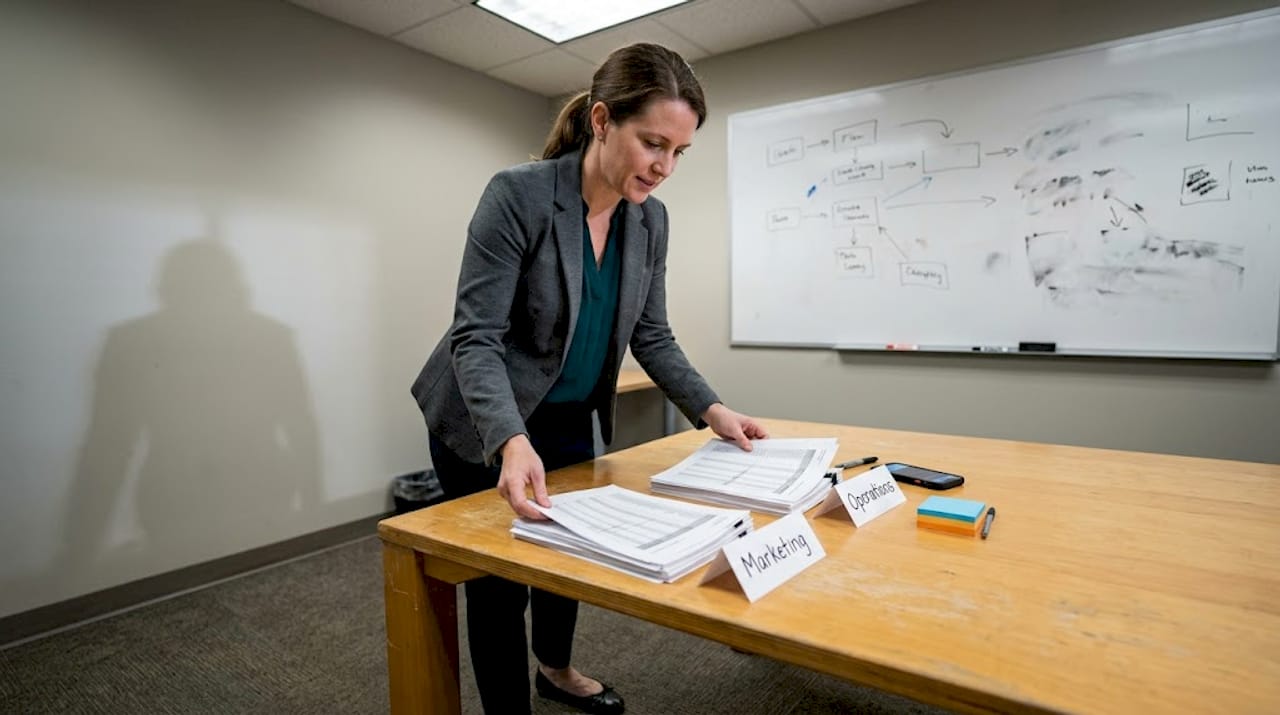
Segment your prospect list by relevance. Sending the same email to a VP of Marketing and a Director of Operations is a waste of both their time and yours. These roles have completely different pain points, priorities, and success metrics. Effective lead generation strategies always start with segmentation. Group your prospects by industry, company size, seniority level, and geography before you write a single word.
Map your value to each recipient's role. Once you've segmented, ask yourself: what does this specific person actually care about? A CFO cares about cost reduction and ROI. A Sales Director cares about pipeline velocity and quota attainment. A Marketing Manager cares about lead quality and campaign performance. Your email should speak directly to their world, not yours.
Use public signals to personalize at scale. LinkedIn is a goldmine for this. Check for recent job changes, company announcements, funding rounds, new product launches, or executive interviews. These are called "trigger events," and they give you a natural, timely reason to reach out. When you reference something real and recent, your email immediately feels less like a template and more like a genuine conversation starter.
Here are the most effective personalization signals to look for:
- Recent funding announcements (Series A, B, or C rounds)
- New executive hires or promotions
- Company expansions into new markets
- Published thought leadership content by the prospect
- Industry award wins or recognition
- Recent product launches or pivots
According to HubSpot's cold email research, personalize with specific research like recent news or published content to dramatically improve response rates. This isn't about flattery. It's about showing the prospect that you actually did your homework.
Pro Tip: Set up Google Alerts for your top 20 target accounts. You'll get notified the moment something newsworthy happens, giving you a fresh, timely hook for your outreach without spending hours on manual research.
Good professional email list building also plays a role here. Starting with accurate, verified contact data means your personalization efforts land in the right inbox every time. Pairing solid data with building verified email lists ensures your research-driven approach actually reaches the right person.
Craft compelling subject lines and concise messages
Once you know your audience, capturing their attention comes next. The subject line is your first impression, and in most cases, it's the only thing standing between your email and the trash folder.
Keep subject lines short and specific. Research consistently shows that short subject lines in the 21-40 character range boost open rates in B2B cold outreach. That's roughly 4-7 words. Long subject lines get cut off on mobile devices, and they tend to feel like marketing blasts rather than personal notes. Keep it tight.
Here's a quick framework for writing high-performing subject lines:
1. Reference something specific to the prospect ("Your Q1 hiring push")
2. Lead with a benefit or question ("Cut your onboarding time in half?")
3. Use their company name or role ("For [Company] sales teams")
4. Keep it conversational, not corporate ("Quick question, [First Name]")
5. Avoid spam trigger words like "free," "guaranteed," or "limited offer"
| Subject line type | Example | Expected open rate |
|---|---|---|
| Generic | "Introducing our platform" | 8-12% |
| Name-only personalized | "Hi [Name], check this out" | 14-18% |
| Trigger-based | "[Company] just raised funding" | 25-35% |
| Role-specific question | "How are you handling [pain point]?" | 22-30% |
"The best subject line is the one that makes the recipient feel like the email was written specifically for them, not blasted to a list of thousands." This is the mindset shift that separates average campaigns from exceptional ones.
Write emails under 100 words. This is where most B2B reps struggle. They feel the need to explain everything upfront, justify the outreach, and list every feature. Resist that urge. Your goal isn't to close the deal in one email. Your goal is to earn a reply. A tight, focused message that respects the reader's time performs far better than a wall of text.
End with a low-friction CTA. "Would you be open to a 15-minute call this week?" is far more effective than "Please schedule a demo at your earliest convenience." The first feels like a conversation. The second feels like a sales process. You can explore cold email lead generation best practices and other outreach tactics to keep refining your approach.
Pro Tip: Run A/B tests on your subject lines by splitting your list into two equal segments. Test one variable at a time, whether that's length, tone, or personalization level, and track open rates over at least 100 sends before drawing conclusions. Tools like automated subject line optimization can speed this process up significantly.
Personalization and value-driven content
With attention secured, making your message resonate personally is crucial. Surface-level personalization, like inserting a first name, no longer moves the needle. Prospects have seen that trick a thousand times.
Go deeper than the first name. Reference the prospect's specific role and what that role is responsible for. Mention a challenge that's common in their industry right now. Acknowledge a recent achievement, like a product launch or a company milestone. This level of specificity signals that you're not just running a mass campaign. You're reaching out because you genuinely believe you can help them specifically.
Lead with value, not with yourself. The most common mistake in cold emails is opening with "My name is [X] and I work at [Y] and we help companies like yours..." Nobody cares yet. Open with something that's relevant to them. A surprising insight, a relevant benchmark, or a specific observation about their business. Earn their attention before you ask for their time.
Here's a direct comparison of generic versus personalized approaches:
| Element | Generic version | Personalized version |
|---|---|---|
| Opening line | "We help B2B companies grow." | "Saw that [Company] just expanded to three new markets." |
| Value statement | "Our platform saves time and money." | "Teams in logistics typically cut onboarding by 40% in the first quarter." |
| CTA | "Let us know if you're interested." | "Open to a 10-minute call Thursday or Friday?" |
| Tone | Formal and transactional | Conversational and specific |
According to HubSpot's research on cold outreach, personalized emails with role-specific information perform significantly better than generic outreach. The conversion gap between the two approaches can be as wide as 6x in reply rate.
Use social proof strategically. A brief mention of a relevant case study or a recognizable client name adds instant credibility. Keep it to one line. Something like "We helped [Similar Company] reduce churn by 22% in 90 days" is concrete, believable, and relevant. It doesn't require a paragraph to land.
Useful content types to reference in your emails:
- Industry benchmark reports your prospect would find valuable
- Case studies featuring companies in their sector
- Short how-to resources relevant to their current challenges
- Recent data points about their market or competitors
You can also explore AI-powered personalization tips to scale this kind of targeted messaging without sacrificing quality. Pairing smart personalization with targeted B2B email lists means your well-crafted messages reach the exact contacts most likely to respond.
Follow-up strategies and measuring success
Even the perfect email won't suffice without strategic follow-ups and measuring your approach. Most replies don't come from the first email. They come from the second or third touch, when the timing finally aligns for the prospect.
Use a 3-touch cadence. Here's a structure that consistently works:
1. Day 1: Initial outreach. Your main email with a personalized hook, clear value, and a single CTA.
2. Day 4-5: Short reminder. A brief reply to your original thread. Something like "Wanted to bump this up in case it got buried." Keep it under 30 words.
3. Day 10-12: Value-added follow-up. Share something genuinely useful. A relevant article, a data point, or a quick insight tied to their business. This reframes the follow-up as helpful rather than pushy.
Research confirms that one clear CTA per email and concise follow-ups increase engagement across the sequence. Cluttering your follow-ups with multiple asks or lengthy explanations kills momentum.
Automate the sequence, but personalize the content. Automation tools let you schedule your cadence in advance, which saves time and ensures consistency. But don't let automation replace genuine personalization. At minimum, reference something specific in each follow-up that ties back to the prospect's situation.
Track the right metrics. Vanity metrics won't improve your campaigns. Focus on:
- Open rate: Tells you if your subject line is working (aim for 40%+ in B2B cold outreach)
- Reply rate: The real measure of engagement (a strong campaign hits 8-15%)
- Meeting set rate: How many replies convert to actual conversations
- Bounce rate: Signals data quality issues in your contact list
Know when to stop. Sending four, five, or six follow-ups doesn't just annoy prospects. It damages your sender reputation and increases the chance your domain gets flagged as spam. Tools for automating follow-ups can help you set hard stops and manage sequences cleanly.
Pro Tip: Stop your sequence after three total attempts with no reply. Mark the contact for re-engagement in 60-90 days rather than continuing to push. Timing matters more than persistence, and refining prospect outreach with fresh data regularly keeps your pipeline healthy.
Why most cold emails fail—and what B2B pros really need to change
Here's the uncomfortable truth: the "spray and pray" approach to cold emailing is not just ineffective, it's actively counterproductive. Sending 500 generic emails a day might feel like hustle, but it trains your prospects to ignore you, damages your sender domain, and burns through contact lists faster than you can replenish them.
We've seen this pattern repeatedly. Teams invest in automation tools and large contact lists, then wonder why their reply rates hover at 1-2%. The issue isn't the volume. It's the relevance. A single, well-researched email to the right person at the right moment will outperform 50 generic blasts every time.
In 2026, the bar for cold email has risen significantly. Prospects are more sophisticated, inboxes are more filtered, and AI-generated outreach has flooded the space with noise. The reps who break through are the ones who treat cold email as a research exercise first and a writing exercise second.
The best cold emailers we know spend more time understanding a prospect's world than they spend writing the actual email. That ratio might feel inefficient, but it's what drives 10-15% reply rates while everyone else celebrates hitting 3%.
Ask yourself honestly: would you reply to your own cold email?
Accelerate your outreach with SphereScout's B2B solutions
Applying these best practices is far more effective when you're starting with the right contacts. SphereScout gives B2B sales and marketing teams instant access to B2B email lists by industry, segmented by category, geography, and company type so your personalized outreach lands with the right people every time.
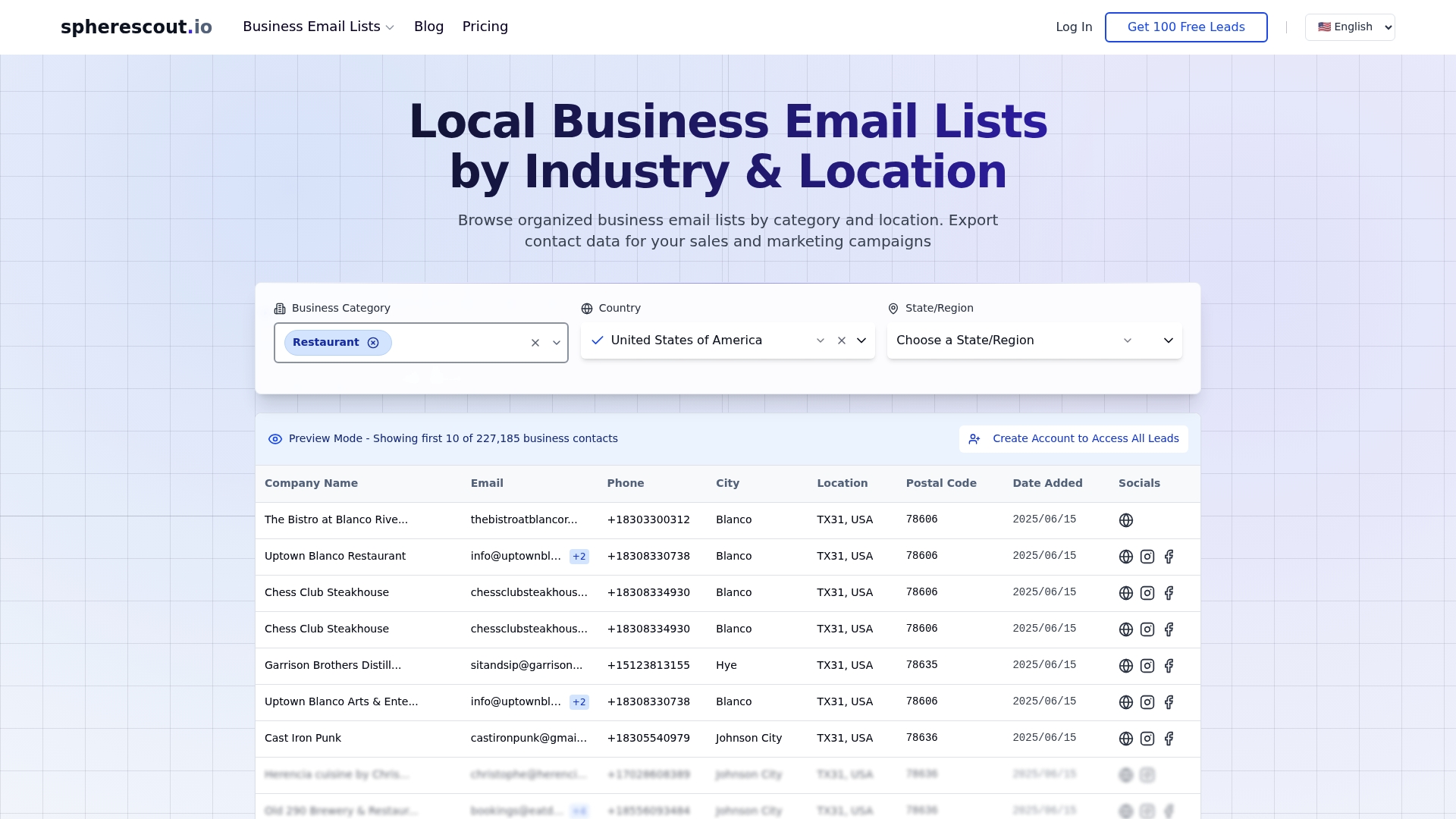
Whether you need instant B2B email contacts for a targeted campaign or want to scale your pipeline with intelligent lead generation, SphereScout's database of over 30 million verified contacts makes it straightforward. Export CSV files directly to your CRM and start sending smarter, more targeted cold emails today.
Frequently asked questions
How long should a cold email be for best response rates?
Emails under 80-100 words get better results, so aim for brevity and focus on a single, clear message to increase your chance of a reply.
What is the most important element in a cold email?
A personalized hook and a single clear, low-friction call-to-action drive the best engagement, as personalization and one clear CTA are consistently cited as best practice in high-performing B2B outreach.
How many follow-up emails should I send?
Send up to two follow-ups after your initial outreach. Best practice is 2-3 emails in a sequence total, stopping if there is no reply to protect your sender reputation.
What is a good cold email subject line for B2B outreach?
Keep it under 40 characters and reference something specific to the recipient, since subject lines 21-40 characters consistently perform best for open rates in B2B cold outreach.
Recommended
- Free email list: 100 B2B contacts by industry
- Cold email lead generation guide
- Buy Email Database | Instant B2B Email Lists & Contacts
- Local Business Email Lists by Industry & Location | SphereScout
- B2B email marketing process
- Email marketing strategies that drive real B2B results
- email verification